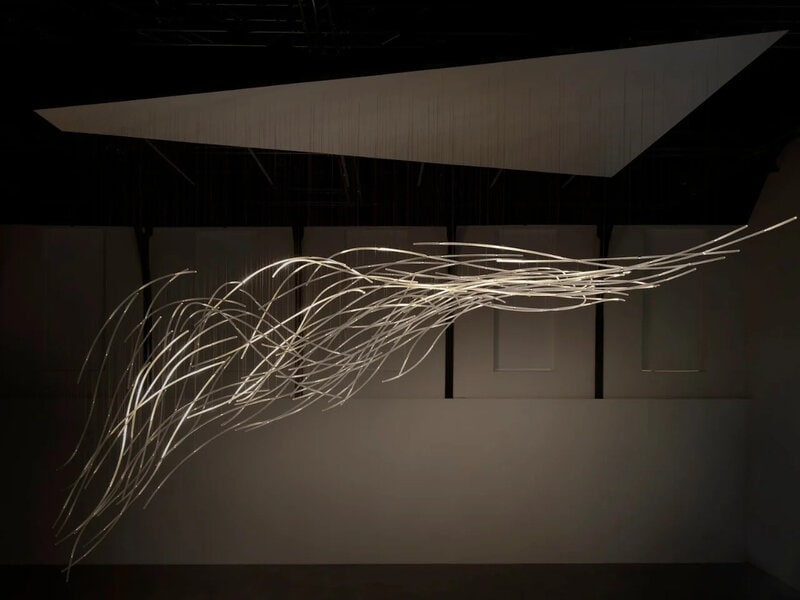
DRIFT created ‘Aeolus’ as an artwork that makes airflow visible to visitors. Instead of reading a real draft in the room, the Amsterdam studio maps the host architecture, simulates how air would move through the space and fixes one selected moment as a hanging glass form.
At London’s Ladbroke Hall, where Carpenters is presenting the piece from Oct. 13-25, hundreds of suspended glass rods and built-in LEDs create a sense of movement without shifting the structure itself. As visitors walk beneath it, the light pattern changes, allowing the room’s geometry and the audience to shape what is seen.
Its architecture-led setup turns a gallery into part of the work rather than a neutral container. That gives exhibition venues a direct role in the piece and widens where interactive light art can fit because each version is built from the room that holds it.
Image Credit: DRIFT
Key Themes Behind This Trend
- Architecture-responsive Art
- Gallery-specific installations are gaining relevance as artists use spatial data and structural conditions to create works that cannot be separated from their host environments.
- Simulated-nature Experiences
- Computational models of invisible forces such as airflow are becoming creative tools for immersive installations that translate scientific phenomena into sensory encounters.
- Static-motion Illusions
- Light-driven glass and suspended materials reveal potential for artworks and interiors that suggest movement without relying on mechanical parts or kinetic infrastructure.
Where This Applies
- Experiential Art
- Site-shaped installations expand exhibition formats by turning venues into active components of the artwork and increasing the value of location-specific programming.
- Architectural Lighting
- Responsive illumination systems tied to room geometry introduce new possibilities for adaptive ambiance, branded environments, and spatial storytelling.
- Cultural Venues
- Museums, galleries, and design halls can differentiate through installations that reinterpret existing architecture as a dynamic medium for visitor engagement.