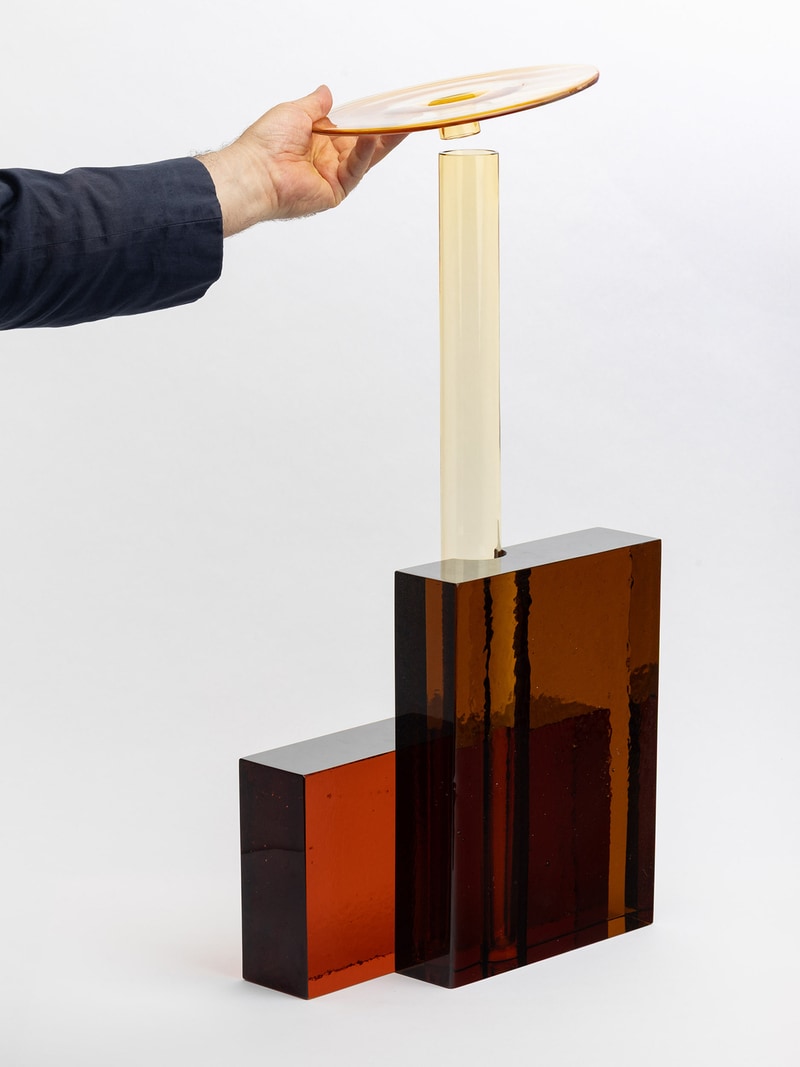
The Inchiostri Exhibition by Ronan Bouroullec and Giorgio Mastinu brings together handcrafted glass compositions that investigate transparency, colour and light through modular forms. Produced in collaboration with master glassblower Simone Cenedese, each work is assembled from cast glass blocks, blown glass tubes and shallow dishes in a palette of eleven hues. The elements combine without fasteners, allowing varied configurations that shift chromatic relationships and refractive effects depending on placement.
Surfaces are intentionally left partially unpolished to intensify subtle colour vibrations, while polished edges allow light to pass cleanly through the structures. The series references Venice’s glassmaking heritage and adopts a restrained geometric language that positions the works between sculptural object and functional vessel. The exhibition received the Premio Fondazione di Venezia during The Venice Glass Week.
Image Credit: Ronan Bouroullec, Giorgio Mastinu
Key Themes Behind This Trend
- Modular Glass Architecture
- Assemblies of interlocking glass elements suggest new approaches to adaptable partitioning and façade systems that change spatial dynamics through reconfigurable transparency.
- Chromatic Transparency
- Layered colored glass blocks point to novel ways of manipulating natural and artificial light to create dynamic interior atmospheres and visual privacy gradients.
- Heritage Craft-tech Fusion
- Collaborations between master artisans and contemporary designers indicate potential for hybrid production methods that merge traditional glassblowing with modular manufacturing techniques.
Where This Applies
- Interior Design
- Customizable glass modules provide opportunities for interior environments that adapt aesthetic tone and daylight performance without structural renovation.
- Lighting and Luminaires
- Tuned refractive and chromatic properties of cast and blown glass hint at lighting fixtures that sculpt light quality and color in immersive ways.
- Luxury Tableware and Objects
- Handcrafted glass components with interchangeable configurations open space for collectible, design-forward product lines that blend utility and sculptural value.