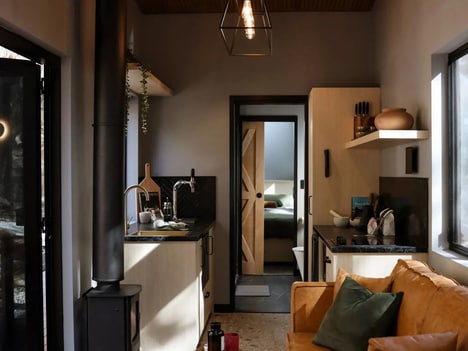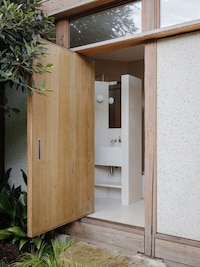
Love Shack by Second Edition is an innovative example of a home built almost entirely from salvaged materials. In fact, the only brand-new components are the tiles, plasterboard, and an outdoor spa; even the custom light fixtures are crafted from recycled timber.
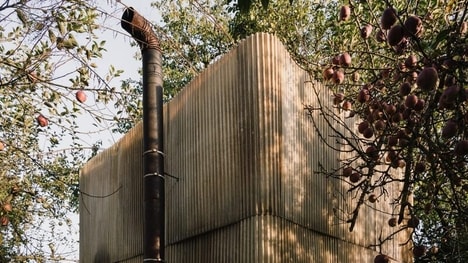
The structure itself is largely recycled: timber from salvaged sources forms the columns, joists, beams, rafters, doors, and window frames, while crushed marble waste is incorporated into the facade’s render. Inside, tallowwood floorboards repurposed for wall linings, along with leftover oak and Oregon veneer, are used in the joinery. Even the lighting is crafted from leftover timber off-cuts.
"Our industry is currently geared towards a linear building process meaning circular processes will generally cost more," Shahar says. "But, we can work together as an industry by normalising these systems and processes on more projects and being open with our findings between peers… with every iteration the process becomes more efficient and more streamlined."
Image Credit: Second Edition
Why This Trend Is Growing
- Circular Architecture
- Circular architecture, where buildings are composed of recycled and salvaged materials, presents an opportunity for reducing waste and environmental impact in construction.
- Sustainable Lighting Solutions
- Sustainable lighting solutions are emerging with fixtures crafted from leftover materials, offering eco-friendly alternatives in interior and exterior design.
- Recycled Material Innovation
- Innovations in using recycled materials, such as crushed marble waste and repurposed floorboards, are transforming traditional building practices into more sustainable ones.
Industries Being Reshaped
- Green Building Industry
- The green building industry is being revolutionized by projects that emphasize the use of sustainable and recycled materials in design and construction.
- Eco-interior Design
- Eco-interior design is gaining prominence by integrating repurposed and recycled materials into aesthetic and functional elements within homes and commercial spaces.
- Waste Repurposing
- The waste repurposing industry is advancing by developing processes to incorporate industrial by-products, like marble waste, into new building materials.