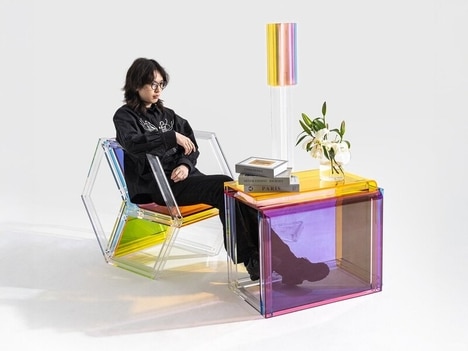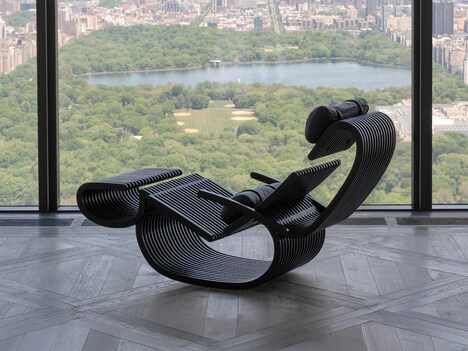
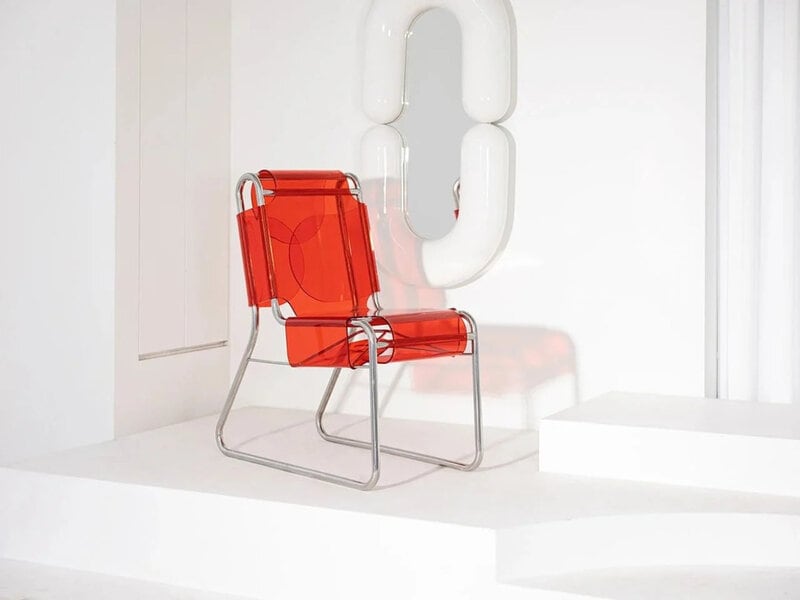
Jihong Lee is turning the process of folding into the defining feature of a chair, using thin acrylic sheets to create a piece that sits somewhere between furniture and sculpture. The material bends into a rounded, inflated-looking form, giving the transparent chair a softer appearance than the rigid material might suggest.
The design takes cues from origami and balloons, using curved folds to make acrylic appear almost padded and voluminous. The shell rests on a leg frame and can be secured without additional bolts or bonding, leaving the folded form visually uninterrupted.
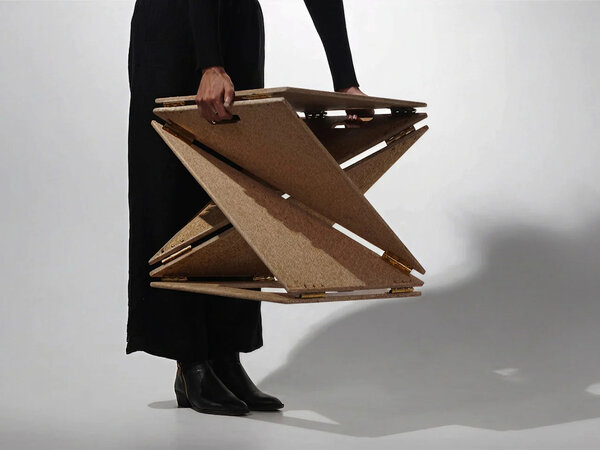
The chair is also designed to arrive flat-packed, making assembly part of the experience. Once folded into shape, what begins as a set of flat sheets becomes a functional seat with a more sculptural presence, showing how flat-pack furniture can be designed to remain on display rather than simply stored away.
Image Credit: Jihong Lee
What's Driving This Trend
- Sculptural Flat-pack Furniture
- Flat-pack designs with gallery-like forms create room for brands to merge compact logistics with premium visual presence in home and hospitality spaces.
- Soft-looking Hard Materials
- Rigid substrates that mimic plush, inflated, or padded aesthetics suggest new possibilities for emotionally engaging products made from durable, unconventional materials.
- Tool-free Assembly Design
- Fastening systems that avoid visible bolts, adhesives, or complex hardware support cleaner product expressions while simplifying setup and reducing component waste.
Who This Affects Most
- Furniture
- Residential and commercial furniture markets can benefit from expressive flat-pack pieces that balance efficient shipping with design-led differentiation.
- Interior Design
- Transparent, sculptural seating introduces opportunities for interiors that use functional objects as lightweight visual statements rather than background elements.
- Materials Design
- Acrylic and other sheet materials shaped through folding techniques point to material innovation that transforms standard surfaces into dimensional product forms.