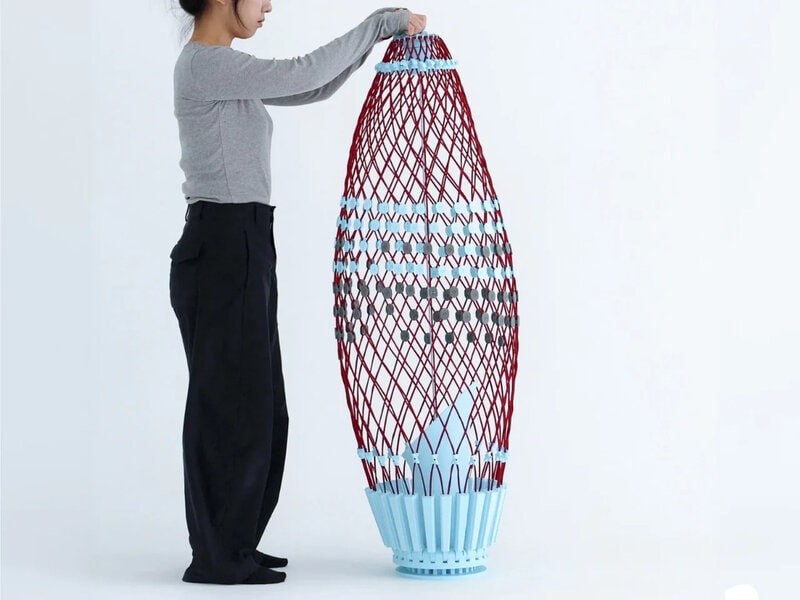
The Re-flat pack sofa is an experimental furniture concept by Seoul-based industrial designer Jisu Yoon that rethinks conventional flat-pack design through material innovation. Instead of relying on a rigid frame, foam cushions, and manual assembly, the sofa is constructed using nitinol, a nickel-titanium shape-memory alloy commonly found in medical stents and aerospace applications. The superelastic wires allow the structure to fold into a compact form before returning to its original shape when deployed. Handwoven fabric cords, 3D-printed PLA joints, and a central locking hub complete the design, creating a single structure that combines support and seating without separate internal components.
Developed over 1.7 years of prototyping, the project explored materials including steel wire, carbon rods, glass fibre, nylon rope, and polypropylene before settling on nitinol for its ability to withstand repeated folding without losing its form. The sofa expands to 700 × 700 × 600 mm and compresses into a narrow 250 × 250 × 1,430 mm column for transport or storage.
Image Credit: Jisu Yoon
Why This Trend Is Growing
- Self-deploying Furniture
- Shape-memory materials enable compact products to expand into functional furniture forms, creating new possibilities for tool-free setup, urban mobility, and space-constrained living.
- Smart Material Design
- Advanced alloys such as nitinol introduce structural flexibility into consumer goods, allowing everyday products to merge durability, transformation, and lightweight portability.
- Assembly-free Interiors
- Furniture concepts that remove hardware, frames, and manual construction point to more seamless ownership models for renters, small-space residents, and direct-to-consumer brands.
Industries Being Reshaped
- Furniture
- Material-led construction can redefine flat-pack categories by replacing traditional components with integrated structures that fold, lock, and support users in one system.
- Interior Design
- Adaptive furnishings offer designers new ways to plan flexible rooms where seating, storage, and spatial layouts can shift quickly without permanent installations.
- Advanced Materials
- Consumer applications for shape-memory alloys broaden commercial pathways beyond aerospace and medical uses, linking high-performance material science with mass-market home products.