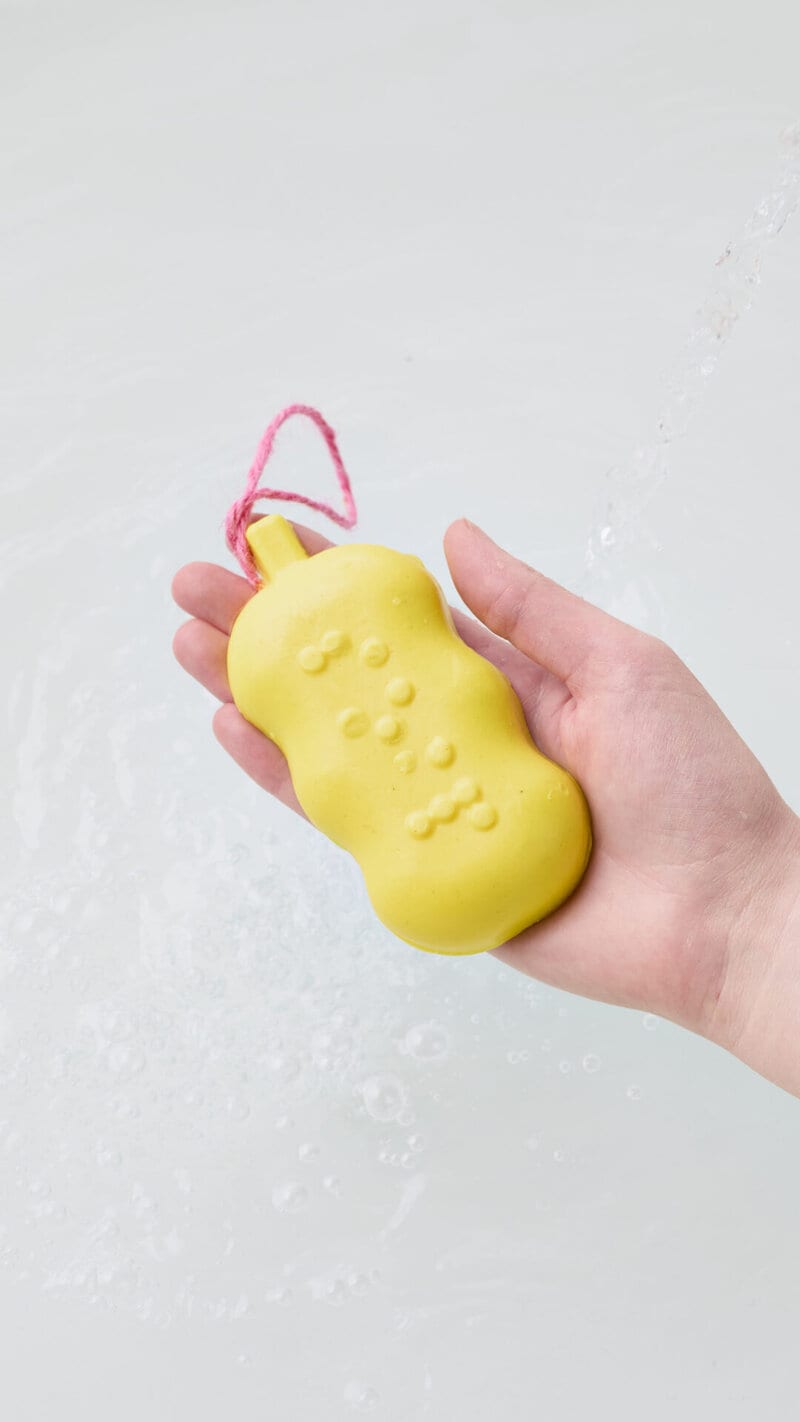
In partnership with Disability Power Ireland, Lush launched a new Lush Giving soap called Access All Areas that helps to raise awareness about the barriers people with disabilities face and the ways disability is perceived and understood. The high-contrast soap, launching in shops and online exclusively in Ireland, reads "SOAP" in braille, is sculpted to support a secure grip, and includes a rope that can be wrapped around a hand for additional slip protection.
“By choosing packaging-free, we’ve removed the difficulty of opening bottles, and by combining a soap and scrub into one, we’ve created an energy-saving experience, complete with soothing, anti-inflammatory ingredients," shared Heather Edwards, Disability and Chronic Illness Network Chair at Lush, who helped co-create the product. "We have also included a QR code for screen-reader accessibility and ingredient transparency."
75% of the sales price of the product, minus tax, will be donated to Disability Power Ireland in support of its Disability Pride and Power Parade and Festival and ongoing advocacy work.
Why This Trend Is Growing
- Accessible Solid Cleansers
- Inclusive soap formats with braille, high-contrast design, and grip-support features reveal market space for personal care products built around disability-led usability.
- Package-free Accessibility
- Removing conventional bottles and caps creates openings for low-waste hygiene products that also reduce dexterity, strength, and vision-related barriers.
- Cause-linked Inclusive Beauty
- Donation-backed product launches connected to disability advocacy show how beauty brands can pair limited-edition retail with community-centered impact.
Industries Being Reshaped
- Personal Care
- Adaptive bathing products with combined cleansing and exfoliating functions point to new differentiation in everyday self-care for people with varied access needs.
- Sustainable Packaging
- Naked product formats demonstrate how packaging reduction can intersect with accessibility, creating alternatives to hard-to-open containers and excess materials.
- Assistive Design
- Features such as braille labeling, wrist ropes, and screen-reader QR codes highlight opportunities for universal design principles to expand into mainstream consumer goods.