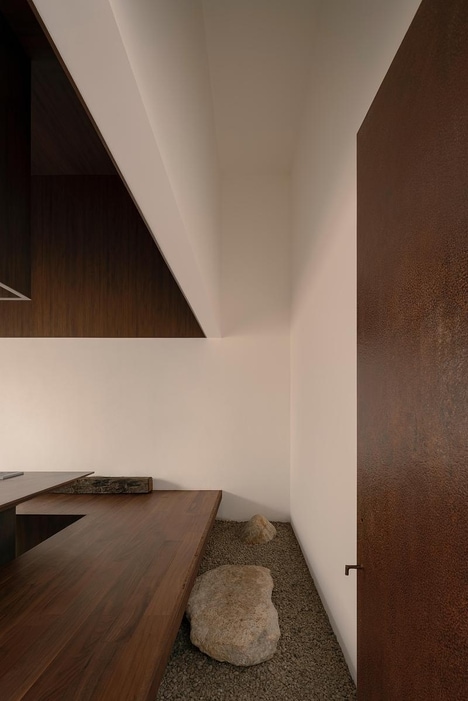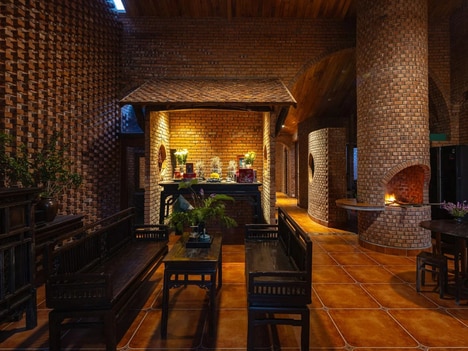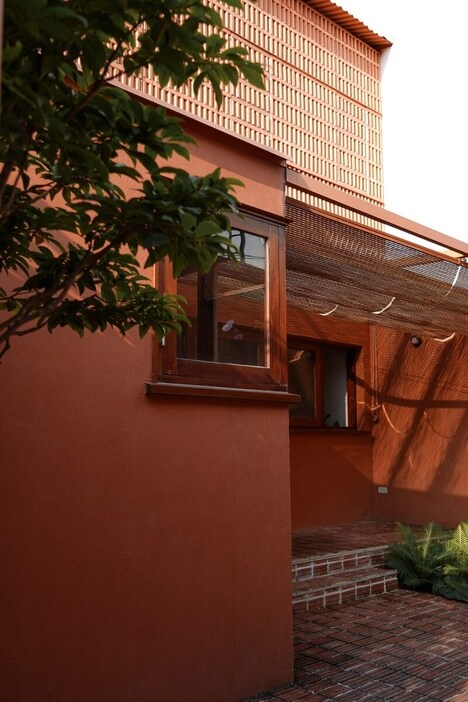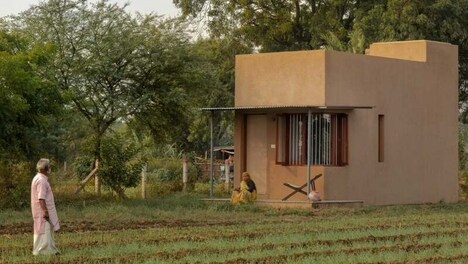
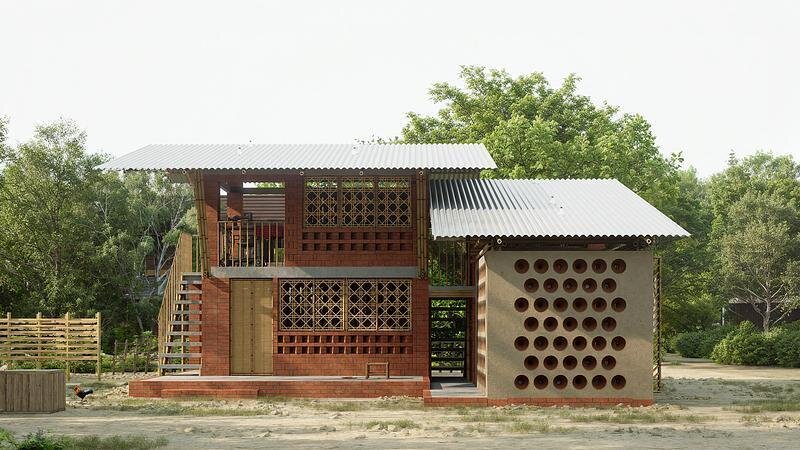
New York-based registered Xinyun Li has developed an unbuilt residential concept called the $2,500 Vernacular Home for Para Dash, a bamboo-weaving village in Modonpur, rural Bangladesh. This project proposes a multi-generational dwelling constructed primarily from locally sourced materials such as mud, straw, bamboo, locally fired brick, and reclaimed tin.
The $2,500 Vernacular Home's design responds directly to the region's challenging climatic conditions, including intense heat, heavy rainfall, seasonal flooding, and patterns of domestic and economic life. Xinyun Li incorporates passive strategies like a raised veranda that lifts living spaces above potential floodwaters, a steeply pitched roof for rapid water drainage and enhanced interior ventilation, and carefully positioned openings at different heights to encourage natural cross-ventilation and reduce reliance on mechanical cooling.
A major selling point of the design is that it offers an affordable, climate-responsive housing solution with an estimated construction budget under $2,500, including labor and materials.
Image Credit: Xinyun Li
Key Themes Behind This Trend
- Low-cost Climate Housing
- Affordable vernacular construction creates room for scalable housing models that combine flood resilience, thermal comfort, and extreme budget efficiency in vulnerable rural regions.
- Passive Cooling Architecture
- Naturally ventilated layouts, shaded verandas, and steep roof forms point to building systems that reduce dependence on mechanical cooling in hot, humid climates.
- Local Material Construction
- Mud, straw, bamboo, reclaimed tin, and regional brick demonstrate how circular supply chains can support culturally relevant homes with lower costs and reduced embodied impact.
Where This Applies
- Residential Architecture
- Climate-adaptive dwelling concepts are reshaping affordable home design by blending traditional building knowledge with modern resilience requirements.
- Sustainable Construction
- Bio-based and reclaimed materials highlight opportunities for lower-carbon construction methods suited to resource-constrained communities.
- Affordable Housing
- Ultra-low-budget housing frameworks show potential for new development models serving multi-generational families in flood-prone and climate-stressed markets.