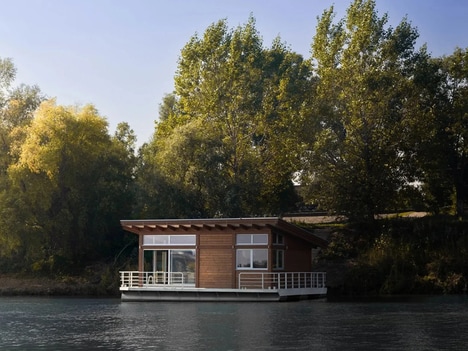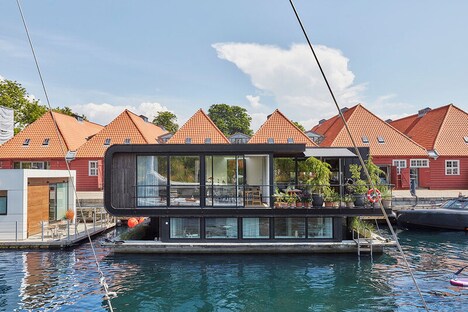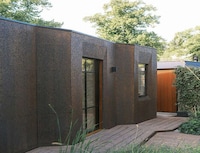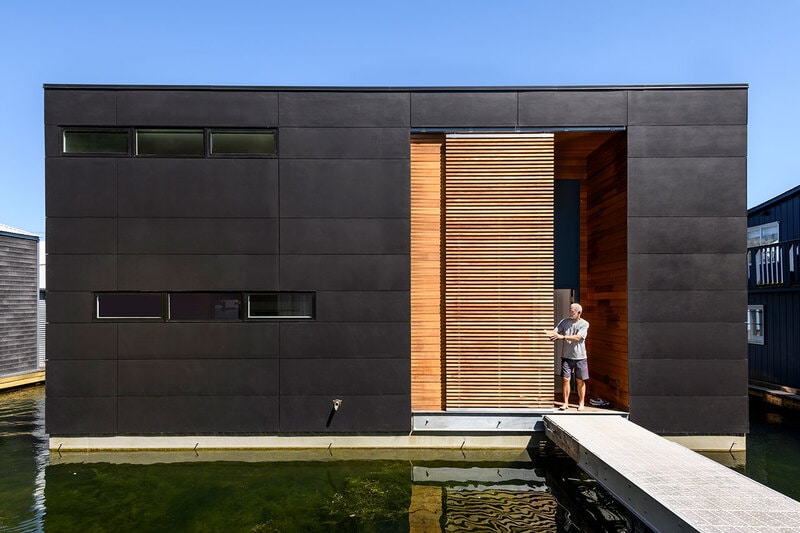
The Pura Vida floating home by Dyna Builders and Hoshide Wanzer Architects occupies Seattle’s Portage Bay with a design rooted in the Costa Rican ideal of pura vida. The home sits on a reinforced concrete float that supports modern infrastructure, while its main living structure was built offsite and carefully towed into position. Large walls of glass on three sides dissolve the boundary between indoors and out, connecting residents with views of the water, city, and sky.
Interiors feature teak cabinetry, white oak flooring, and wood finishes that reflect maritime character. The rooftop deck adds 820 square feet of flexible outdoor space, complete with movable furniture and a rolling fireplace. Passive strategies such as operable screens, sliding glass doors, and a sedum roof help manage privacy, climate, and stormwater. Pura Vida demonstrates how floating architecture can balance elegance, nature, and utility for a serene waterfront lifestyle.
Image Credit: Hoshide Wanzer Architects, Dyna Builders
Why This Trend Is Growing
- Sustainable Floating Architecture
- Floating homes like the Pura Vida illustrate a shift towards eco-friendly architecture that harmonizes with aquatic environments.
- Blurring Indoor-outdoor Boundaries
- The use of large glass walls highlights a growing architectural trend that eliminates the distinction between indoor and outdoor spaces, enhancing natural light and views.
- Adaptable Living Spaces
- The incorporation of flexible, multifunctional spaces such as rooftop decks underscores a trend towards adaptable living environments that can be customized for diverse uses.
Industries Being Reshaped
- Eco-friendly Construction
- The emphasis on sustainable materials and design in floating homes presents emerging opportunities for innovation in the eco-friendly construction industry.
- Marine Architecture
- Floating homes are reshaping marine architecture, focusing on structures that can coexist with water environments while maintaining high aesthetic and functional standards.
- Furniture Design
- The need for movable and adaptive furniture in unique living spaces like floating homes drives innovation in the furniture design industry to create pieces that balance functionality with design.