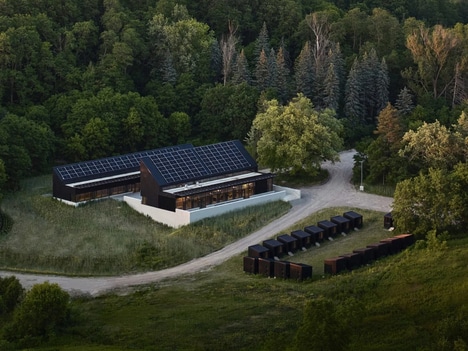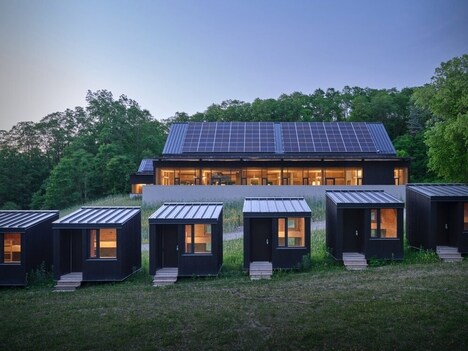
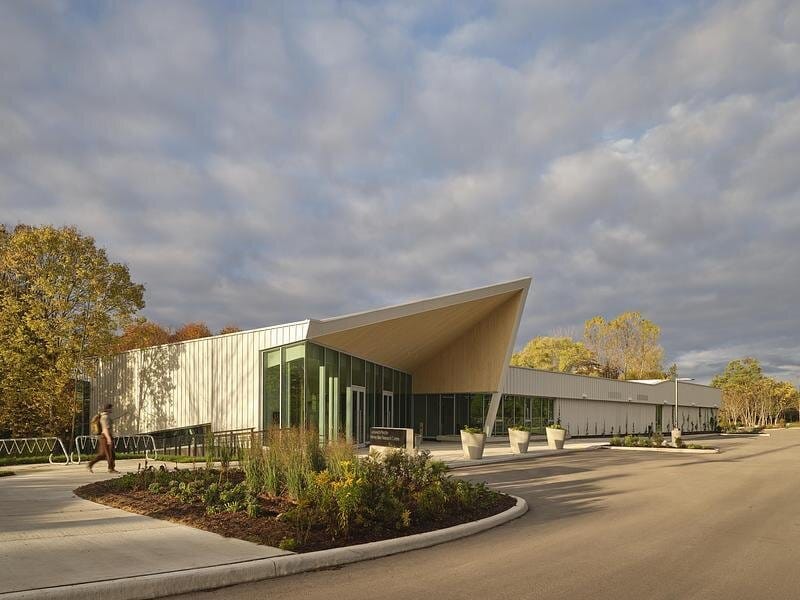
The University of Guelph Honey Bee Research Centre, designed by Moriyama Ţeshima Architects, is a new, world-class facility that officially opened in May 2026. The design sensibilities of this project seek to merge advanced scientific inquiry with commercial apiculture and public education.
The University of Guelph Honey Bee Research Centre sits in a 14,000-square-foot building, situated on a carefully selected site adjacent to the Guelph Arboretum. It functions as a 'living lab' where the intricate relationships between beekeeping, food production, and environmental stewardship are made visible through its very architecture. The design prioritizes operational flow, seamlessly connecting the apiary, research laboratories, and honey extraction rooms to allow for guided public tours that observe commercial processing without disrupting the critical work being conducted.
A key architectural feature is the integration of the topography, with a ramp following the site’s natural contours to ensure accessible journeys for all visitors.
Image Credit: Riley Snelling
Why This Trend Is Growing
- Living Lab Architecture
- Research facilities that visibly connect experimentation, production, and education create new possibilities for institutions to turn infrastructure into immersive public learning platforms.
- Transparent Food Systems
- Facilities designed for observation without operational disruption can help build trust in food production while supporting premium, experience-driven agricultural brands.
- Accessible Science Tourism
- Universally accessible visitor routes embedded into research environments expand the role of campuses as destinations for inclusive, science-led engagement.
Industries Being Reshaped
- Architecture and Design
- Purpose-built research centres that integrate workflow, sustainability, and public access point to rising demand for buildings that function as both laboratories and communication tools.
- Agriculture and Apiculture
- Commercial beekeeping environments paired with advanced research infrastructure offer opportunities for data-rich production models and stronger links between pollination, food security, and education.
- Higher Education
- University facilities that merge academic research with community-facing experiences strengthen institutional relevance through hands-on knowledge exchange and applied environmental stewardship.