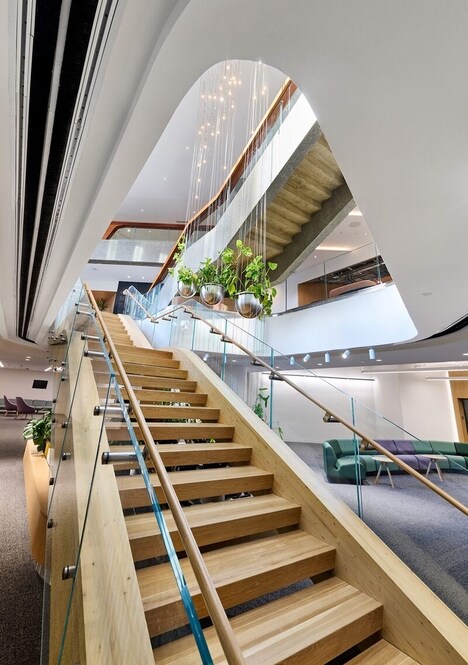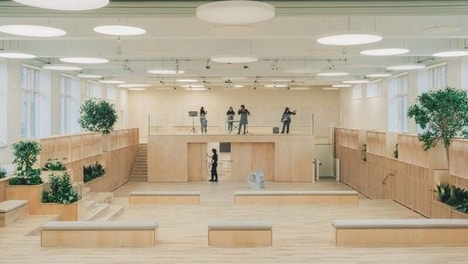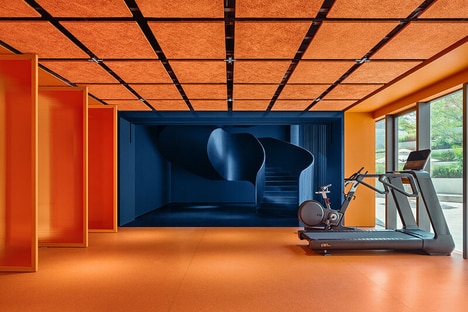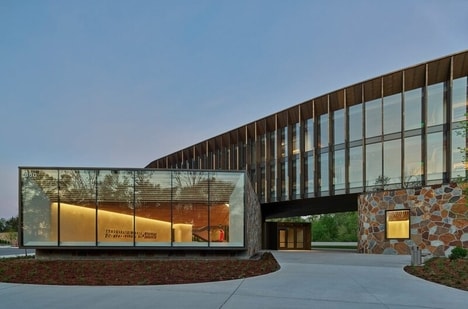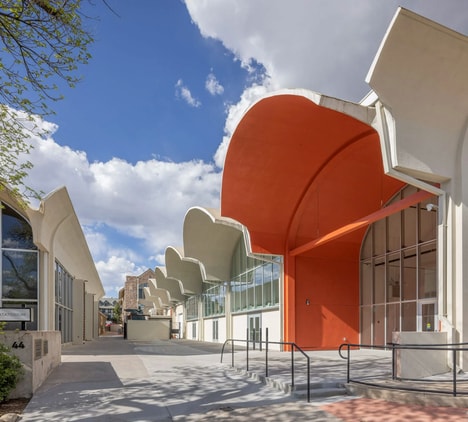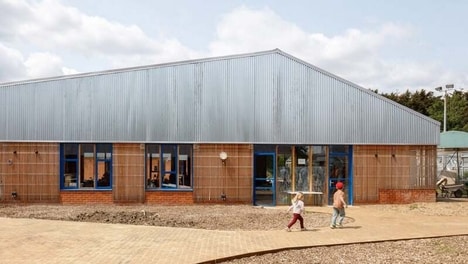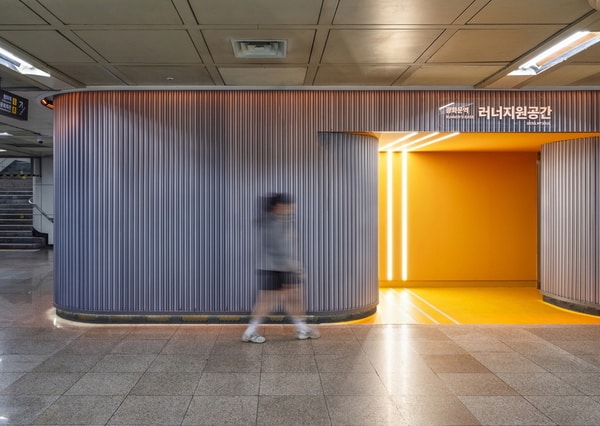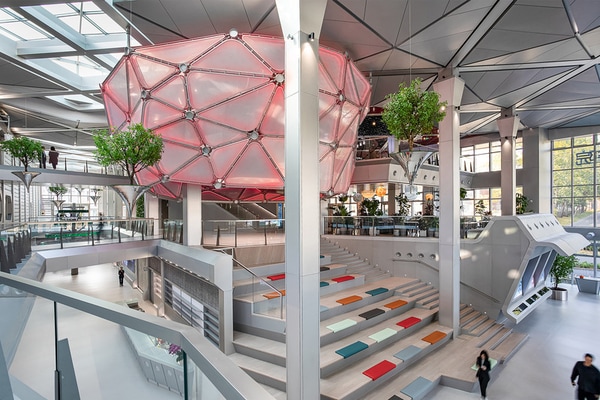
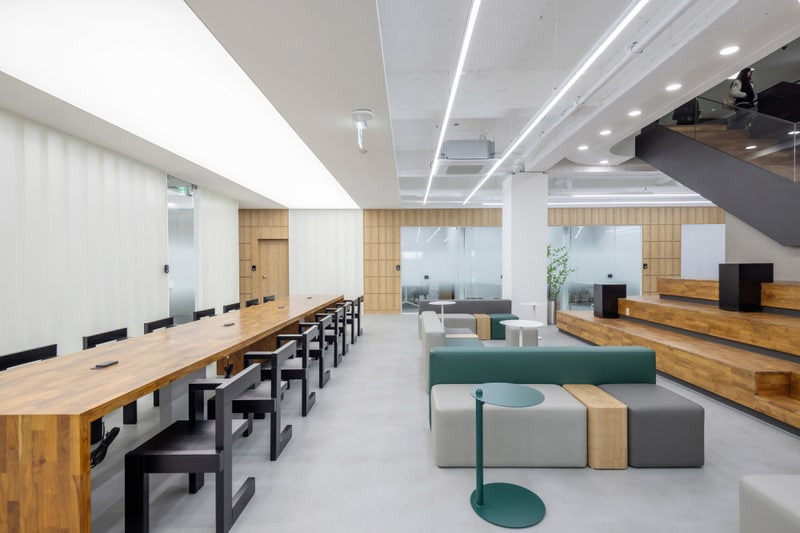
G/O Architecture remodeled Hanyang University’s Student Union into UNI-CENTER, a welfare-focused, multiuse student hub featuring fluid interiors and outdoor-facing circulation. The team reconfigured closed, segmented rooms into open volumes, inserting social devices that encourage lingering and interaction while restoring the building’s role as a campus node.
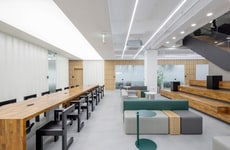
The façade received L-shaped framing and a continuous curved surface that ties ceiling, wall and floor into a guiding form, and the terrace was renewed with metal louvers, linear lighting and green-toned furniture. Inside, the ground floor became a unified hall with a Table Lounge, Stair Lounge and Bar Lounge plus a semi-transparent counseling booth and a birch-and-steel Student Affairs counter.
UNI-CENTER matters because it shifts campus design toward visible welfare and everyday social infrastructure, improving wayfinding, comfort and informal study. The project demonstrates a practical model for future university buildings that prioritize openness, interaction and student well-being.
What's Driving This Trend
- Welfare-focused Campus Design
- Institutions are prioritizing visible welfare in building programs, creating opportunities for spaces that integrate counseling, rest and social support as central campus infrastructure.
- Fluid Interior Circulation
- Open volumes and outdoor-facing circulation are becoming preferred layouts, enabling continuous movement and visual connectivity that redefine wayfinding and spatial hierarchy.
- Social Devices for Lingering
- Insertions like Table Lounges and semi-transparent booths are being used to encourage informal interaction and extended stays, shifting metrics of success from occupancy to engagement.
Who This Affects Most
- Higher Education
- Campus stakeholders are rethinking physical assets as welfare and social infrastructure, creating potential to reallocate budgets toward multifunctional student-centric facilities.
- Architecture and Design Firms
- Design practices are responding to demand for open, wellbeing-focused projects, prompting experimentation with material continuity, modular social furnishings and integrated wayfinding systems.
- Facility Management and Campus Services
- Operations teams are adapting maintenance and programming models to support flexible multiuse hubs, influencing lifecycle planning and service delivery for high-interaction spaces.