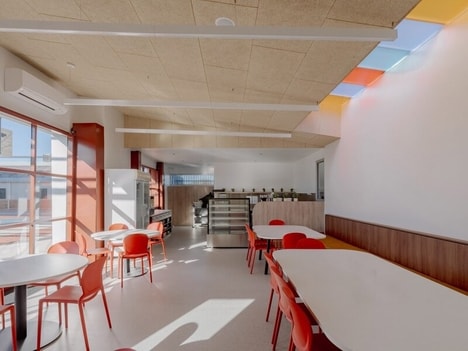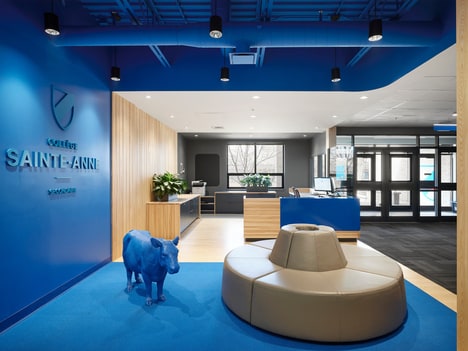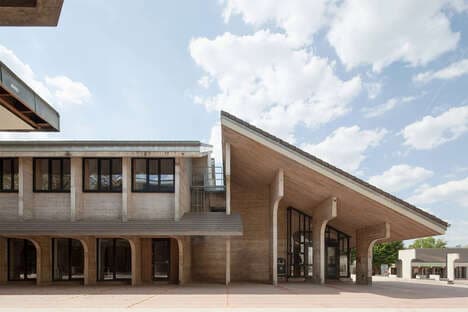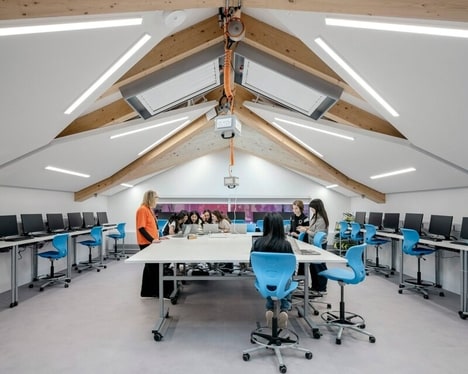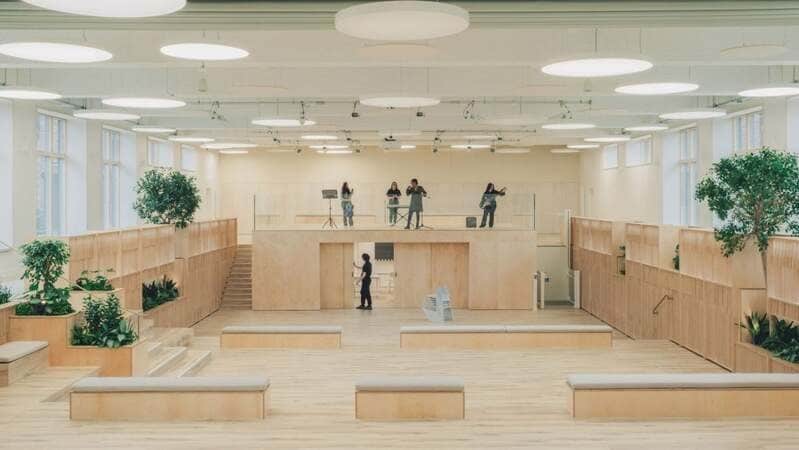
Studio DERA has reimagined the former swimming pool at Waltham Forest College as a flexible, low-carbon learning environment. By retaining the original structure, the design preserves embodied energy while avoiding unnecessary demolition waste. Upgraded insulation, triple glazing, and an all-electric energy system reduce environmental impact and enhance year-round comfort. The result is a space that balances sustainability with adaptive reuse, showing how educational architecture can evolve without erasing its past.
The new layout encourages flexibility through open zones, movable furniture, and a multi-level stage that accommodates lectures, performances, and community events. Natural textures and biophilic elements soften the building’s industrial character, creating an atmosphere conducive to focus and collaboration. Developed in consultation with students and staff, the project transforms a once-idle facility into an inclusive hub for creativity and connection, proving that reimagined spaces can serve both ecological and social purposes.
Image Credit: Lorenzo Zandri
What's Driving This Trend
- Adaptive Reuse Innovations
- The transformation of old structures into new functional spaces highlights an era of design that focuses on sustainability and resource conservation.
- Multi-functional Learning Spaces
- Educational environments are being redefined by incorporating flexible zones and movable furniture to adapt to various learning and community needs.
- Biophilic Design Elements
- Integrating natural textures and elements into architectural spaces offers opportunities to enhance well-being and cognitive performance.
Who This Affects Most
- Sustainable Architecture
- Architectural practices are increasingly focusing on low-carbon solutions and adaptive reuse to minimize environmental impact and preserve resources.
- Education Technology
- Emerging technologies in education are complementing spaces that foster flexibility and collaborative learning, changing how educational content is delivered.
- Furniture Design
- The demand for versatile and movable furniture is rising with the trend of creating spaces that can easily transition between different educational and communal activities.