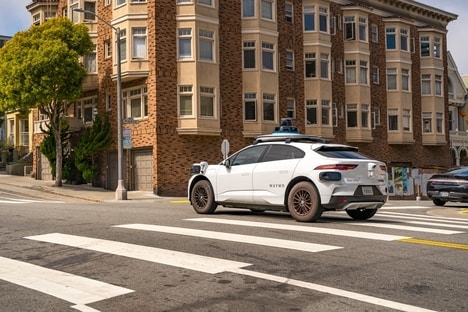

Waymo introduced ReD Reference Driver, a simulated human driver designed to benchmark robotaxi collision-avoidance behavior against a model of a careful and competent driver. Developed with Delft University of Technology, ReD is based on the neuroscience concept of active inference and incorporates elements such as looming threat detection, traffic-norm reasoning and a simulated 0.2-second pause between accelerator and brake inputs. The company described it as a behavioral crash-test dummy intended to help evaluate how autonomous systems respond to road conflicts.
ReD simulates how human drivers update their beliefs as situations evolve, assess uncertainty about other road users’ intentions and select evasive actions such as braking or swerving. The model also supports proactive avoidance by anticipating potential risks before they become conflicts. Waymo published the research in Nature and plans to make ReD available under an academic, non-commercial open-source license.
For consumers, ReD could help establish clearer benchmarks for evaluating autonomous vehicle safety and collision-avoidance performance.
Image Credit: Waymo
Key Themes Behind This Trend
- Human-modeled Safety Benchmarks
- Simulated careful-driver models create clearer reference points for comparing autonomous vehicle responses in complex collision-avoidance scenarios.
- Active-inference Mobility Systems
- Neuroscience-based decision models introduce more adaptive vehicle behavior by accounting for uncertainty, belief updates and evolving road-user intent.
- Open-source Safety Validation
- Academic access to standardized safety models expands independent testing ecosystems around robotaxi performance, trust and regulatory readiness.
Where This Applies
- Autonomous Vehicles
- Robotaxi developers gain more rigorous evaluation frameworks that expose gaps between machine behavior and competent human driving expectations.
- Automotive Safety Testing
- Crash-test methodologies are shifting toward behavioral simulation, where evasive decisions and proactive risk anticipation become measurable safety criteria.
- Transportation Regulation
- Public agencies and standards bodies benefit from comparable safety benchmarks that support more transparent assessment of autonomous mobility systems.