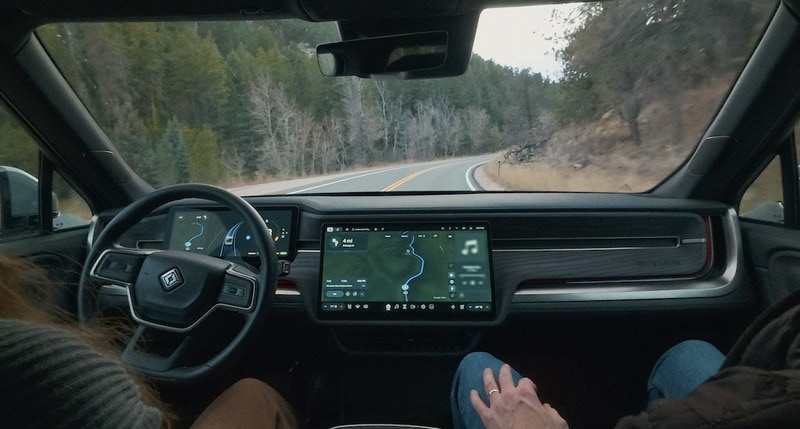
Rivian Universal Hands-Free expands hands-off driving on Gen 2 R1 vehicles through an over-the-air software update for second-generation R1 electric trucks and SUVs. The system allows drivers to remove their hands from the wheel on more than 3.5 million miles of roads across the United States and Canada where clearly painted lane lines are present, including highways and marked surface streets. Drivers must remain attentive and supervise the system at all times, and the software does not handle traffic lights, stop signs, navigation, or turns on its own.
The update is delivered via Rivian’s software version 2025.46 and builds on the brand’s existing driver assistance suite by greatly expanding operational coverage from previously limited highway segments. The Universal Hands-Free feature uses onboard cameras, radar, and compute hardware to assist with lane centering and speed matching while maintaining Level 2 supervised automation standards. Additional software enhancements in the update include a new digital key that integrates with mobile wallets and performance tuning options for certain vehicle variants.
Image Credit: Rivian
What Makes This Trend Stand Out
- Over-the-air Vehicle Updates
- The ability to enhance vehicle functionality via software updates provides manufacturers with the flexibility to continuously refine and expand features without a physical intervention.
- Level 2 Automation Expansion
- By broadening the scope of hands-free capabilities, more drivers can experience the comfort and convenience of advanced driver-assistance systems on a wider array of roads.
- Digital Key Integration
- Integrating digital keys into mobile wallets streamlines the user experience by combining traditional and digital interactions with vehicles.
Sectors Adopting This
- Automotive Technology
- Advancements in hands-free systems and digital tools are reshaping the driving experience by merging technology and transportation seamlessly.
- Connected Vehicles
- Innovations in connectivity are driving the development of smart vehicles capable of real-time software updates and enhanced user experiences.
- Driver Assistance Systems
- Expanding the capabilities of driver assistance systems increases the safety and convenience of modern vehicles, pushing towards more autonomous driving environments.