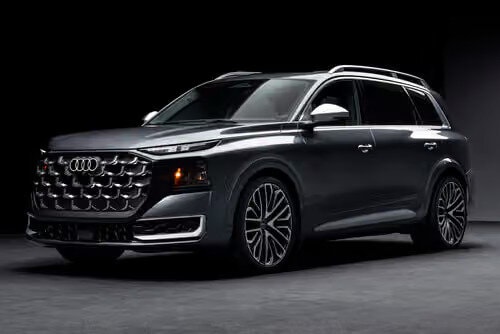
The Audi Q9 and SQ9 mark the brand's first full-size three-row flagship SUVs, developed for the U.S. market with a 208.9-inch body and a 123.5-inch wheelbase. Both models feature a raised shoulder line, monolithic front fascia, and straight window profile, while Digital Matrix LED headlights make their U.S. debut with micro-LED technology that selectively adjusts light output to reduce glare. At the rear, third-generation curved digital OLED taillights introduce customizable light signatures, complemented by turn signals that project directional indicators onto the pavement at night.
The Q9 is powered by a 2.9-liter V6 producing 429 horsepower and 442 lb-ft of torque, while the SQ9 receives a 4.0-liter twin-turbocharged V8 generating 591 horsepower and 590 lb-ft of torque, enabling a 0–60 mph time of 3.8 seconds through an eight-speed Tiptronic transmission and quattro all-wheel drive with an electronically controlled rear differential. The cabin accommodates up to seven occupants, with optional second-row captain's chairs featuring removable armrests and access to the third row.
Image Credit: Audi
Why This Trend Is Growing
- Digital Lighting Signatures
- Customizable OLED taillights and micro-LED headlights create new premium differentiation through safety, personalization, and road-communication features.
- Performance Three-row Suvs
- High-output powertrains in family-sized luxury vehicles are reshaping expectations around utility, speed, and flagship status.
- U.s.-focused Flagship Platforms
- Market-specific full-size SUV development reflects opportunities in localized luxury design, larger cabin formats, and regionally tailored mobility preferences.
Industries Being Reshaped
- Luxury Automotive
- Premium automakers are using design scale, advanced lighting, and performance hardware to extend brand prestige into larger family-oriented segments.
- Automotive Lighting
- Micro-LED and digital OLED systems are expanding vehicle lighting into adaptive safety, visual identity, and interactive signaling applications.
- Passenger Mobility
- Three-row cabin layouts with flexible seating configurations support evolving demand for upscale shared travel, family transport, and executive comfort.