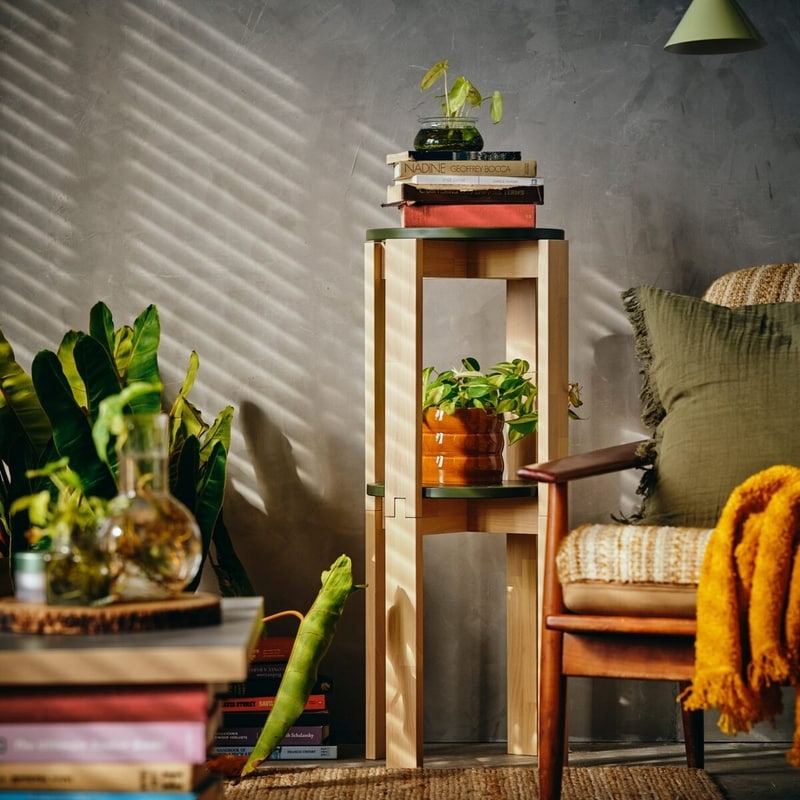
The Kompishäng collection is a portable furniture and homeware range created by IKEA for short-term renters and students who move frequently. The 12-piece collection includes lightweight furnishings designed to be transported without a car, with every item priced below £70. The range features a solid pine flat-pack desk with powder-coated steel legs, a wardrobe organiser that converts into a backpack, a foldable side table carried like a handbag and stackable stools that form a shelving unit.
The collection was developed after IKEA designers visited rental homes occupied by young adults in London to study common moving and storage challenges. Additional products include a wheeled shopping bag that carries up to 10 kilograms, a pine mirror with slots for photographs or postcards, a plant pot holder with carrying handles, a canvas door organiser, a back cushion, an over-door coat rack and a curved bookend with integrated handles.
Image Credit: IKEA
What Makes This Trend Stand Out
- Car-free Furnishing
- Lightweight, modular pieces designed for public transit and walking trips reflect demand for home goods that fit urban mobility constraints.
- Convertible Storage
- Furniture that shifts between organizer, backpack, shelving, and seating formats signals potential for multi-use products in compact rental spaces.
- Budget Mobile Living
- Affordable furnishings tailored to students and short-term renters highlight a growing market for low-commitment homeware that supports frequent relocation.
Sectors Adopting This
- Furniture
- Portable flat-pack designs create openings for brands to rethink durability, assembly, and transport around renters rather than permanent homeowners.
- Student Housing
- Compact furnishings with built-in storage and carry functions align with the needs of temporary residents managing limited space and repeated moves.
- Urban Retail
- Car-free product formats give retailers new ways to serve city shoppers who rely on walking, cycling, and public transportation for purchases.