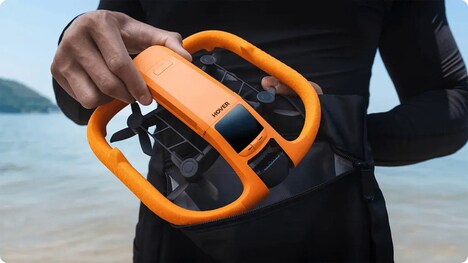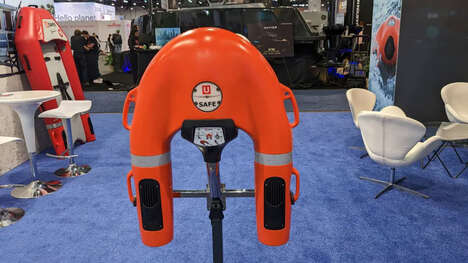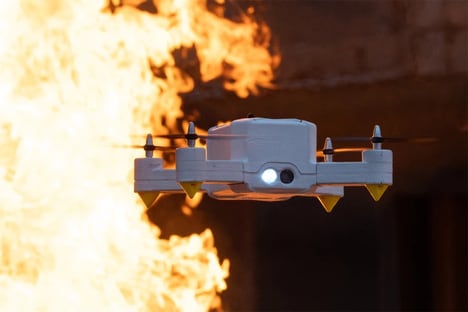
Project Ryptide is a drone attachment that can be attached to a drone and used to carry inflatable life rings to distressed swimmers.
Once a drone has been flown to a location above the swimmer, a button on the drone controller can be pushed to release the life ring. When the life ring hits the water, an attached salt tablet dissolves, causing a spring pin to pierce a carbon dioxide cartridge and inflate the life-ring in just about three seconds.
The Ryptide will come in three different versions. The basic version can be attached to any small drone without any tools. The multi-ring model carries up to four life-rings that can be dropped on at a time. The heaviest version can carry four life-rings as well as a camera.
Key Themes Behind This Trend
- Drone Lifesaving
- The use of drones to quickly deliver life-saving equipment such as life-rings to distressed swimmers presents opportunities for innovation in unmanned aerial vehicles (UAVs) and emergency response technology.
- Automated Water Rescue
- Developing drones with greater autonomy and capabilities to identify and pull distressed swimmers to safety presents opportunities in artificial intelligence (AI) and robotics.
- Remote Emergency Response
- The ability to remotely deploy life-saving equipment in water rescue situations opens up innovation opportunities in emergency response technology and communication infrastructure.
Where This Applies
- Drone Technology
- The use of drone technology for water rescue operations presents opportunities for UAV manufacturers and developers to create specialized, lifesaving equipment with innovative features.
- Emergency Response
- Incorporating drones into emergency response protocols and developing new technologies to detect and respond to water rescue situations presents opportunities for disruption in the emergency response industry.
- Recreation and Tourism
- Integrating drone-based water rescue systems into recreational safety measures and tourism operations presents opportunities for businesses and organizations to increase the safety of water-based activities and attract safety-conscious customers.