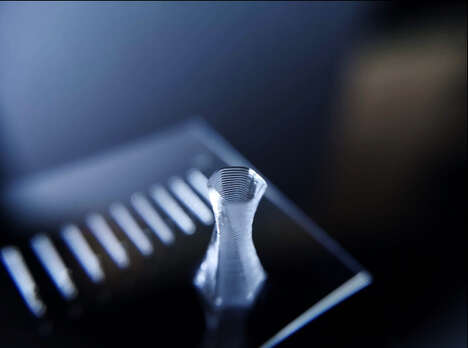


As it stands, most 3D printing technology requires post-processing, which involves the sanding and painting of an object after it has been manufactured. Luxexcel’s Printoptical Technology offers a way to print entirely smooth surfaces from the get-go, entirely eliminating the need for any post-processing or refining.
The technology uses droplets of ink that merge and flow before being cured with UV. As a result, this manufacturing system is ideal for the creation of transparent and completely smooth products. The quality of the products its system can create leads Luxexcel to say that its Printoptical Technology is ideal for optics design.
While additive manufacturing is extremely advantageous for creating rapid prototypes, when a refined finished product is needed, Printoptical Technology is unparalleled.
Why This Trend Is Growing
- Post-processing-free 3D Printing
- Printoptical's technology enables completely smooth surfaces without the need for post-processing, disrupting traditional 3D printing.
- Transparent 3D Printing
- Luxexcel's Printoptical Technology makes the creation of transparent products possible, offering opportunities for innovative products.
- Optics Design with 3D Printing
- Printoptical Technology allows for the creation of high-quality products, making it ideal for optics design and potentially disrupting traditional manufacturing processes.
Industries Being Reshaped
- Manufacturing Industry
- Post-processing-free 3D printing technology can revolutionize traditional manufacturing processes.
- Optics Industry
- Luxexcel's Printoptical Technology can offer innovative solutions for the optics industry and challenge traditional manufacturing processes.
- Product Design Industry
- Transparent 3D printing technology creates opportunities for innovative product designs, disrupting traditional manufacturing and design processes.