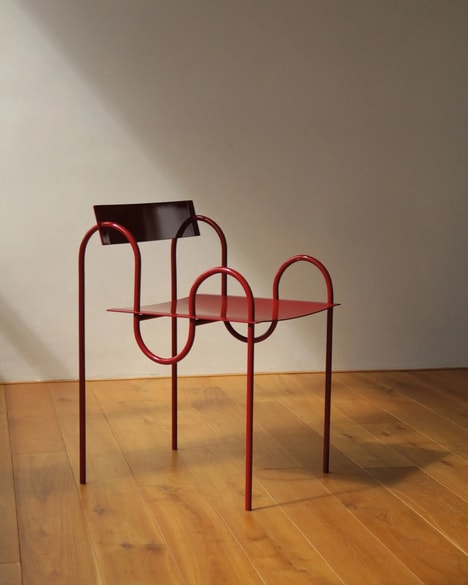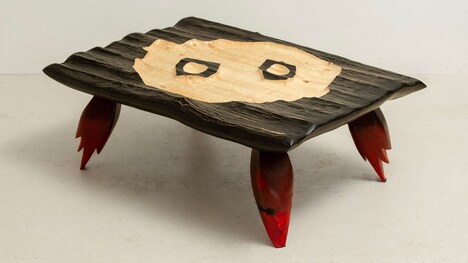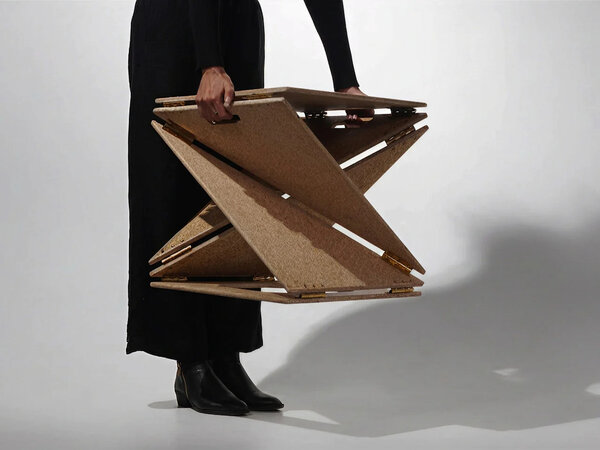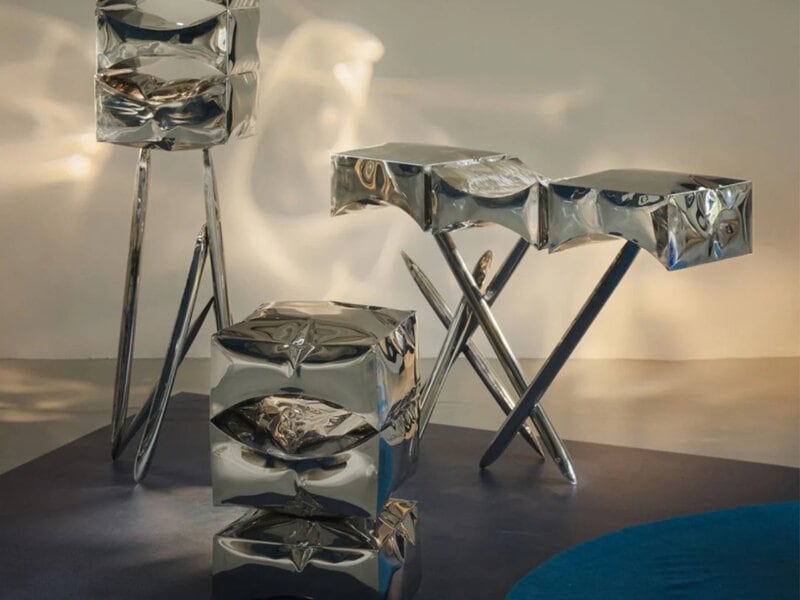
Sarah Naghawi turned stainless-steel sheets into furniture with built-in hollows in ‘JAWF,’ using pressure to replace the usual flat, rigid look. The Jordanian designer presented the experimental collection at Amman Design Week 2026, where the metal reads as bulging, dipping and creasing rather than simply bent.
The pieces are formed through hydromechanical shaping, which sends hydraulic fluid pressure through welded sheet assemblies, causing the steel to expand and deform. That process keeps the surface visibly metallic while giving it depth, volume and an interior space that feels part of the object rather than hidden inside it.
Naghawi shows how treating fabrication as the visual idea, not just the method behind it, can give sculptural furniture a clearer link between form and function, with the cavity becoming as important as the outer silhouette.
Image Credit: Sarah Naghawi / ASPIRE Ali Saadi Photography
Key Themes Behind This Trend
- Inflated Metal Forms
- Hydromechanical shaping creates expressive hollow structures that give rigid materials softer visual language and new ergonomic possibilities.
- Process-led Aesthetics
- Fabrication methods are becoming visible design signatures, allowing objects to communicate how they were made as part of their functional identity.
- Structural Cavities
- Built-in hollows transform furniture volume into a design feature, opening possibilities for lightweight construction, storage integration and acoustic performance.
Where This Applies
- Furniture Design
- Experimental metal forming introduces sculptural alternatives to conventional seating and tables while preserving durability and premium material appeal.
- Industrial Fabrication
- Pressure-based forming techniques expand the role of welded sheet metal beyond utilitarian production into customizable architectural and consumer applications.
- Interior Architecture
- Volumetric steel surfaces offer designers a way to merge furniture, spatial dividers and art objects into cohesive built environments.