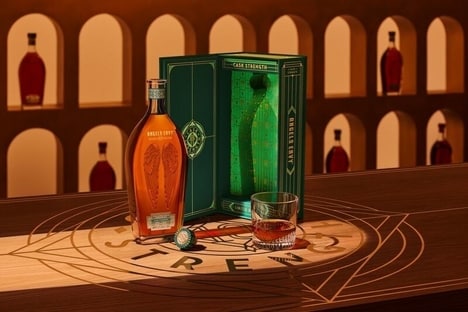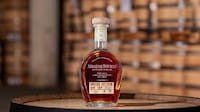

Angel’s Envy has turned its Cellar Collection rye into a cask-driven release built around peach brandy, toasted American oak and toasted French oak. Volume 6 brings those finishes together on a rye whiskey base, with the blend bottled at 110 proof.
The whiskey draws on spirit from two Kentucky distilleries and uses a 95% rye, 5% malted barley mashbill. That structure gives the release a firmer rye backbone while the finishing casks add fruit and wood character without pushing the whiskey into a one-note profile.
At $200, the bottle sits in the upper tier of finished rye, where finish treatment is part of the value proposition as much as the base spirit. The Cellar Collection format also gives Angel’s Envy a clear way to keep experimenting with secondary maturation while keeping the line easy to recognize.
Image Credit: Angel’s Envy
Why This Trend Is Growing
- Fruit-finished Spirits
- Premium whiskey releases are increasingly using fruit brandy casks to create layered flavor profiles that bridge traditional maturation with dessert-like sensory cues.
- Experimental Oak Aging
- Toasted American and French oak finishes highlight how wood treatment can become a central source of differentiation in high-end spirits.
- Limited Cellar Releases
- Recognizable collectible formats give distilleries room to test secondary maturation concepts while preserving brand continuity for premium buyers.
Industries Being Reshaped
- Premium Whiskey
- Upper-tier rye offerings are expanding around cask finishing as consumers attach value to production complexity and distinctive flavor architecture.
- Craft Distilling
- Small-batch and experimental production models benefit from limited releases that showcase mashbill variation, finishing strategy and provenance.
- Luxury Alcohol Retail
- High-proof, high-price bottles with clear release narratives create merchandising opportunities around scarcity, collectibility and flavor innovation.