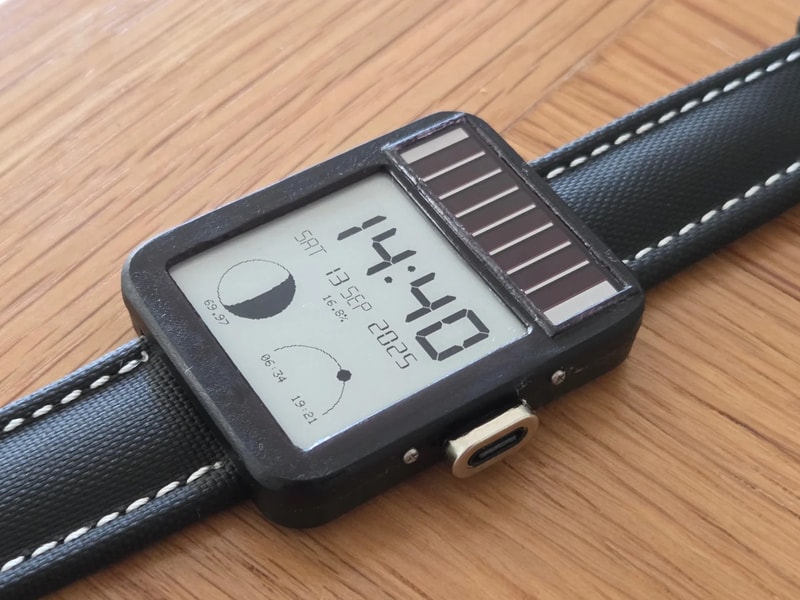
LightInk is an open-source smartwatch concept created by Daniel Ansorregui that combines solar charging, an E-Ink display, and custom low-power electronics. Developed from a project that began in 2019, the watch is built around an ESP32 microcontroller, a custom PCB, and a 1.54-inch electrophoretic display.
The design uses a solar panel integrated into the watch face alongside a 100mAh battery, allowing the device to operate for extended periods between charges. WiFi, Bluetooth, and LoRa connectivity are included, and the hardware is housed in a two-piece 3D-printed case compatible with standard 22mm straps.
A custom power-management system was developed to reduce energy consumption by bypassing the ESP32's conventional boot process. Instead, display updates and wireless transmissions are executed through code stored in RTC memory, reducing wake times to less than one millisecond before returning the device to deep sleep.
Image Credit: Daniel Ansorregui
Why This Trend Is Growing
- Solar-powered Wearables
- Energy-harvesting watch designs create room for ultra-low-maintenance devices that reduce dependence on frequent charging and proprietary power accessories.
- E-ink Smart Devices
- Low-refresh electrophoretic displays support always-visible interfaces for wearables where battery longevity, outdoor readability, and minimalist interaction are central differentiators.
- Open-source Hardware Design
- Community-developed smartwatch platforms can accelerate niche device experimentation through customizable circuitry, 3D-printed enclosures, and transparent firmware ecosystems.
Industries Being Reshaped
- Consumer Electronics
- Extended-life smart accessories introduce new product categories positioned around durability, repairability, and practical functionality rather than high-refresh screens and app-heavy experiences.
- Wearable Technology
- Solar charging, low-power chips, and alternative displays point to wearables that serve remote, outdoor, and industrial users with reduced charging friction.
- Sustainable Technology
- Battery-efficient connected devices represent a pathway toward lower electronic waste, longer product lifecycles, and energy-conscious personal technology markets.