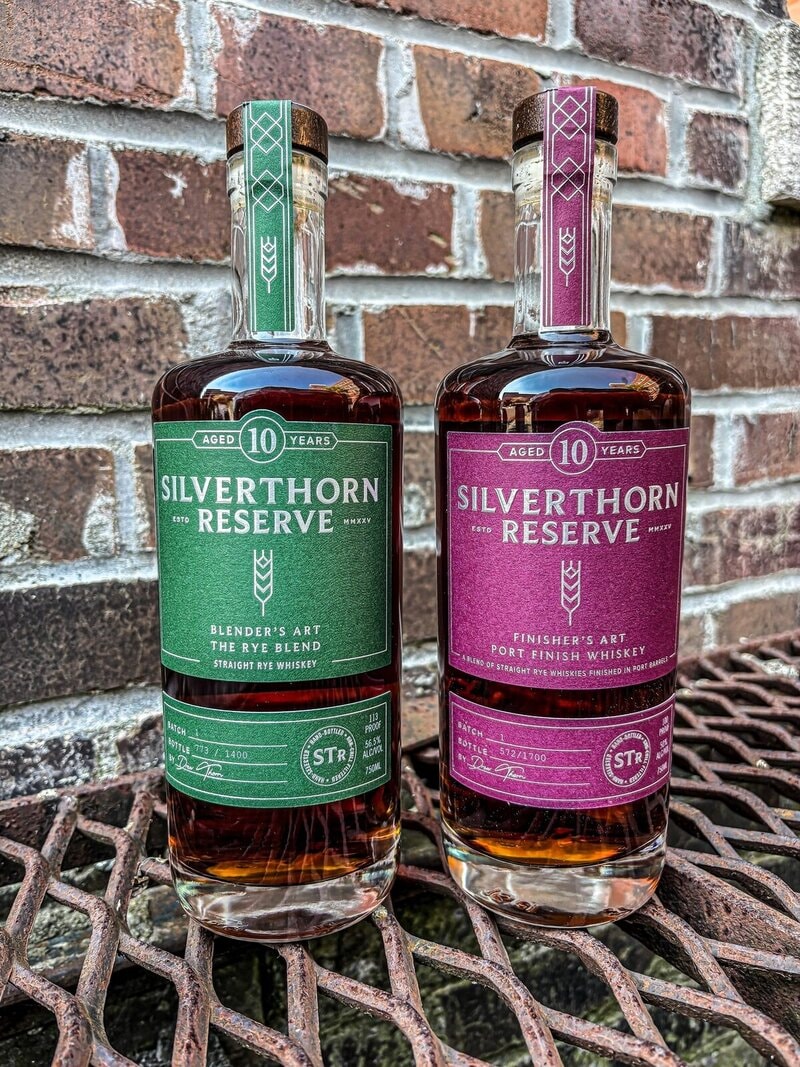
Silverthorn Reserve is sharpening rye whiskey with two 10-year-old expressions that push blending and finishing in different directions. The brand's Blender's Art Rye and Finisher's Art Port Finish Whiskey are built to give drinkers either a vivid straight-rye profile or a softer finish wrapped in Tawny Port.
The Blender's Art release draws from eight barrels, while the Port Finish whiskey starts from six rye barrels before resting in port-seasoned casks. That split lets one bottle lean into bright spice and oak, while the other layers in darker fruit and a gentler edge without losing the rye core.
This offers bourbon-adjacent rye fans two clear ways into the category: one focused on barrel selection, the other on secondary maturation. It also gives bottle buyers a sharper choice between bold structure and a more polished finish, instead of a vague aged-rye label.
Image Credit: Silverthorn Reserve
What's Driving This Trend
- Dual-expression Spirits
- Side-by-side releases create clearer consumer pathways through complex categories by contrasting production methods, flavor profiles, and maturation choices.
- Port-finished Rye
- Fortified wine cask finishing introduces richer fruit notes and softer textures that broaden rye whiskey’s appeal beyond traditional spice-forward drinkers.
- Blender-led Positioning
- Named blending strategies elevate barrel selection into a visible point of differentiation, turning production nuance into a premium storytelling asset.
Who This Affects Most
- Whiskey
- Aged rye expressions with distinct finishing approaches expand premium shelf segmentation and support more precise consumer trade-up decisions.
- Alcohol Retail
- Clearly differentiated bottles give retailers stronger merchandising cues for guiding shoppers between bold, classic, and sweeter whiskey profiles.
- Hospitality
- Bars and restaurants can build more intentional tasting experiences around comparable rye expressions that highlight maturation, blending, and cask influence.