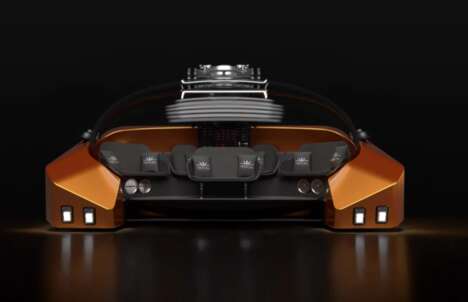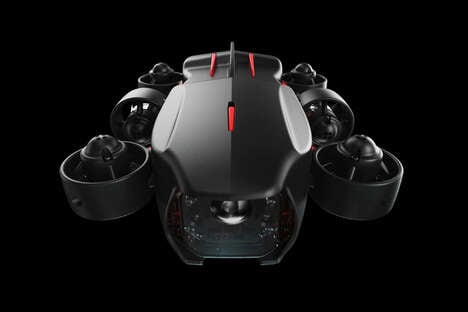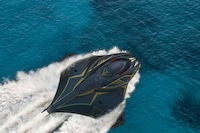
As part of the Nautilus 100 challenge, UK Nest and the Royal Navy challenged participants to imagine the future of underwater warfare. The winning design takes the form of a futuristic, 3D-printed submarine vessel that boasts design that embraces biomimicry and resembles the softly sculpted shape of a manta ray. Alongside this, the concept design also details the inclusion of eel-like, unmanned arms.
It is imagined that the hull of the machine would be assembled from a combination of acrylics and alloys, with morphing "electronic graphene scales." To push the design further, the designer also envisions that the vessel would be able to dissolve completely in salt water when a situation calls for stealthiness.
As additive manufacturing makes it much more cost-effective to produce complex shapes, especially ones that are curved, this 3D-printed design pushes past what has previously been possible in deep-sea vessel designs.
What Makes This Trend Stand Out
- Biomimicry in Design
- The winning 3D-printed submarine design embraces biomimicry by resembling the shape of a manta ray, opening opportunities for incorporating nature-inspired elements in various industries.
- Additive Manufacturing
- The use of 3D printing technology enables the cost-effective production of complex shapes, disrupting the traditional manufacturing process and creating new possibilities for deep-sea vessel designs.
- Unmanned Technology
- The concept design includes unmanned arms, highlighting the growing trend of using unmanned technology for various applications, such as underwater warfare.
Sectors Adopting This
- Maritime Industry
- The 3D-printed submarine design has the potential to revolutionize the maritime industry by offering more efficient and innovative vessels with enhanced capabilities.
- Defense Industry
- The biomimicry-inspired submarine design presents disruptive innovation opportunities for the defense industry to explore new ways of underwater warfare and stealth operations.
- Additive Manufacturing Industry
- The advancement of additive manufacturing in creating complex and curved designs opens up opportunities for the additive manufacturing industry to further expand its applications in various sectors, including deep-sea vessels.