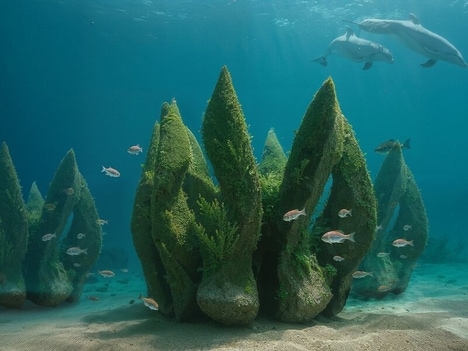
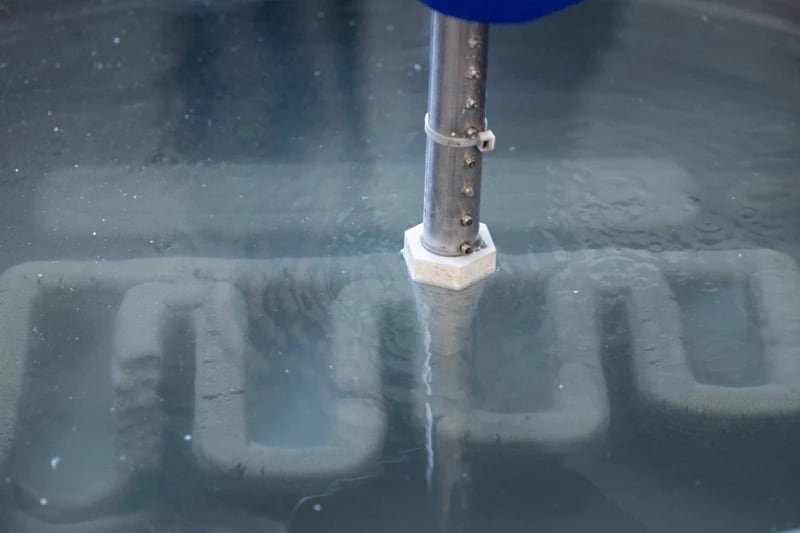
Cornell University researchers developed an underwater 3D concrete printing system for DARPA’s 3DCP challenge, featuring a novel two-stage material process. The project focused on creating a printable concrete that could function below the surface while incorporating seafloor sediment to reduce material transport. Led by civil and environmental engineering professor Sriramya Nair, the team built on its experience printing large concrete structures with a heavy robotic arm.
The two-stage approach injected a chemical admixture directly at the printer nozzle instead of mixing it into the base material. This allowed the concrete to flow smoothly through the system yet rapidly harden once deposited underwater. Lab tests in a large water tank helped the team study how arches formed, measuring strength, shape, and surface texture under continuous water exposure.
This technology matters for maritime construction because it targets faster, less labor-intensive ways to build and repair submerged infrastructure. By enabling precise, real-time controlled printing in low-visibility conditions, the system could support tunnels, pipelines, and offshore structures with fewer divers and less environmental disturbance. It also reflects a wider trend toward automating complex infrastructure tasks using robotics and advanced materials.
Image Credit: Cornell University
Why This Trend Is Growing
- Underwater 3D Printing
- The advancement of underwater 3D concrete printing provides a transformative approach to submerged construction projects, offering efficient solutions for building in aquatic environments.
- Sustainable Construction Materials
- Incorporating local seafloor sediments into concrete formulations exemplifies a shift towards environmentally sustainable materials in construction, significantly reducing the carbon footprint associated with material transport.
- Automation in Maritime Infrastructure
- The deployment of autonomous systems and robotics for underwater construction tasks marks a significant move toward automating complex and hazardous processes, enhancing efficiency and safety.
Industries Being Reshaped
- Maritime Construction
- Maritime construction is being revolutionized as underwater 3D concrete printing systems enable novel methodologies for building robust submerged infrastructure with reduced human intervention.
- Robotic Engineering
- Robotic engineering is pivotal as it supports the transition toward automated construction techniques, particularly in challenging environments like undersea habitats.
- Sustainable Materials Manufacturing
- The integration of sustainable sources such as seafloor sediments in concrete production illustrates an innovative leap in materials manufacturing, emphasizing resource efficiency and ecological benefits.