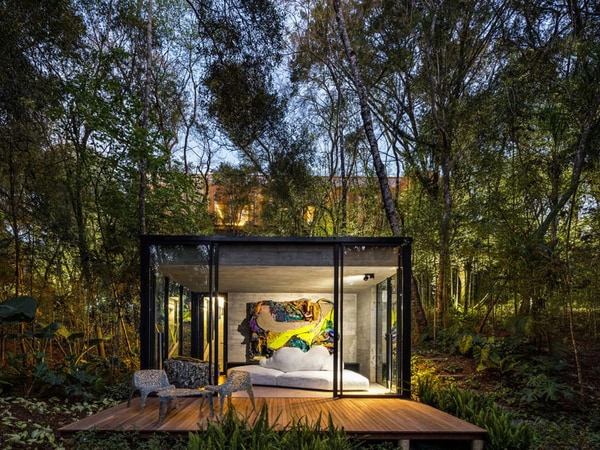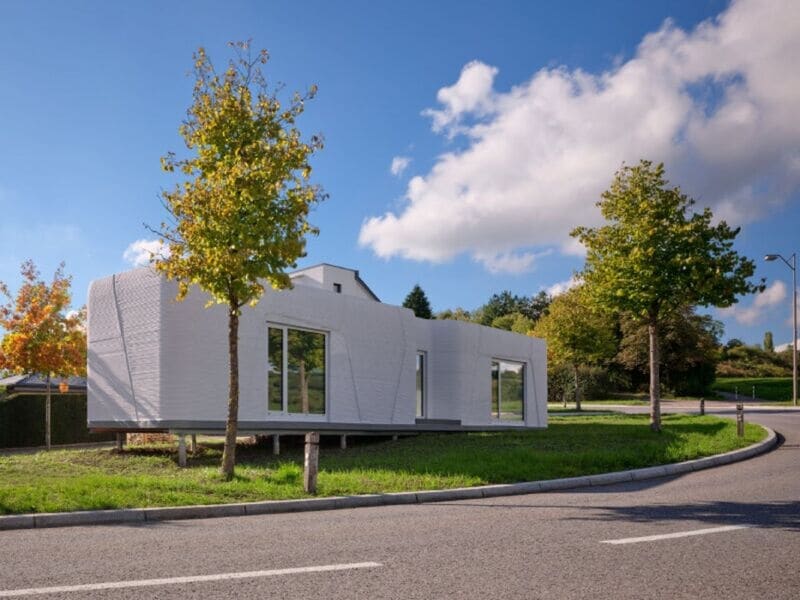
The Tiny House LUX is a 47-square-metre 3D-printed concrete residence designed by ODA Architects in collaboration with Coral Construction Technologies as a prototype to address Luxembourg’s housing shortfall. Constructed using robotic concrete extrusion on site, the home’s major structural components were printed in a matter of days before subsequent assembly and finishing work took place.
The project is positioned as the nation’s first fully 3D-printed residence and explores rapid, cost-effective construction techniques compared with traditional masonry or timber methods. The municipality of Niederanven is leasing the tiny home to a resident under a long-term housing initiative that supports starter accommodation. The interior layout combines living, dining, kitchen, bedroom, and bathroom zones within a continuous space that opens to an exterior terrace, and large openings bring natural light into the compact footprint.
Image Credit: ODA Architects
Why This Trend Is Growing
- Rapid Construction Techniques
- The accelerated pace of building enabled by 3D printing offers transformative possibilities for meeting urgent housing demands.
- Cost-effective Housing Solutions
- 3D-printed homes present a potential remedy for high construction costs by utilizing automated methods to reduce labor expenses.
- Sustainable Building Practices
- Employing 3D printing for home construction can minimize waste and utilize sustainable materials, offering an eco-friendly alternative to traditional building methods.
Industries Being Reshaped
- Real Estate Development
- The integration of 3D printing technology into real estate presents opportunities to revolutionize housing markets with efficient building processes.
- Construction Technology
- Advancements in 3D printing pave the way for innovative solutions within the construction industry, offering new methods for erecting structures quickly and affordably.
- Smart Cities
- 3D-printed residences can contribute to the development of smart cities, enabling faster infrastructure setup and offering adaptive housing solutions.