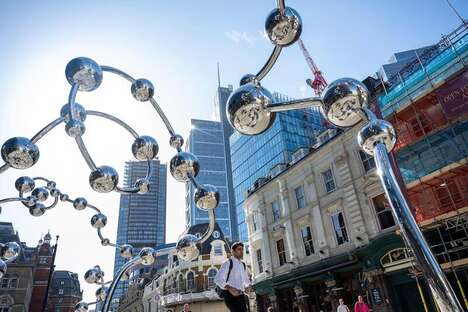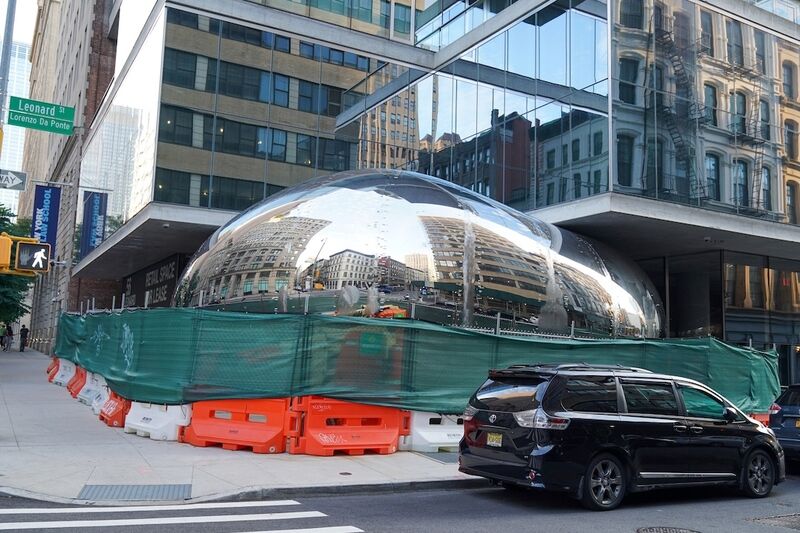
British-Indian artist Anish Kapoor unveils a look at its new mini-Bean sculpture in the Tribeca neighborhood in New York City. It is a project that has been in the works for years due to delays and it can be found along the tower at 56 Leonard Street.
It is meant to be a smaller version of the iconic Cloud Gate and the construction of the artwork took 4 years including all of the setbacks. Although it is referenced as the Mini-Bean currently, there has yet to be an official name for the structure. It features 38 stainless steel plates that are placed on top of a custom supporting framework and all of this has been welded together, sanded down, and polished.
Image Credit: Zhukovksy, Dreamstime.com
Why This Trend Is Growing
- Interactive Public Art Installations
- The rise of interactive public art installations can create more engaging experiences for viewers and provide opportunities for businesses to sponsor and showcase their brand in conjunction with the artwork.
- Sustainable Art and Architecture
- The use of sustainable materials and construction techniques in public art can encourage sustainability and eco-friendliness in urban landscapes.
- Artistic Collaborations in Urban Planning
- Collaborations between artists and urban planners can lead to the development of more aesthetically pleasing and culturally significant public art installations that enhance the beauty and ambiance of a city while also increasing local tourism.
Industries Being Reshaped
- Architecture and Engineering
- The architecture and engineering industry can benefit from creating more sustainable and visually appealing designs for public art installations.
- Tourism
- The tourism industry can leverage large-scale public art installations as a means to attract more visitors to a city or region.
- Branding and Marketing
- The branding and marketing industry can partner with artists and commission public art installations as a way to showcase their brand and establish a deeper connection with local communities and consumers.