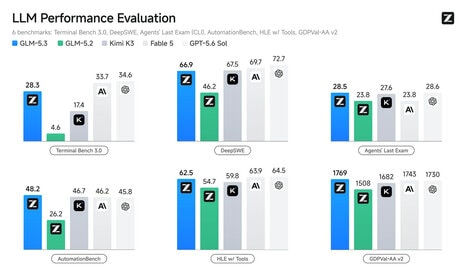
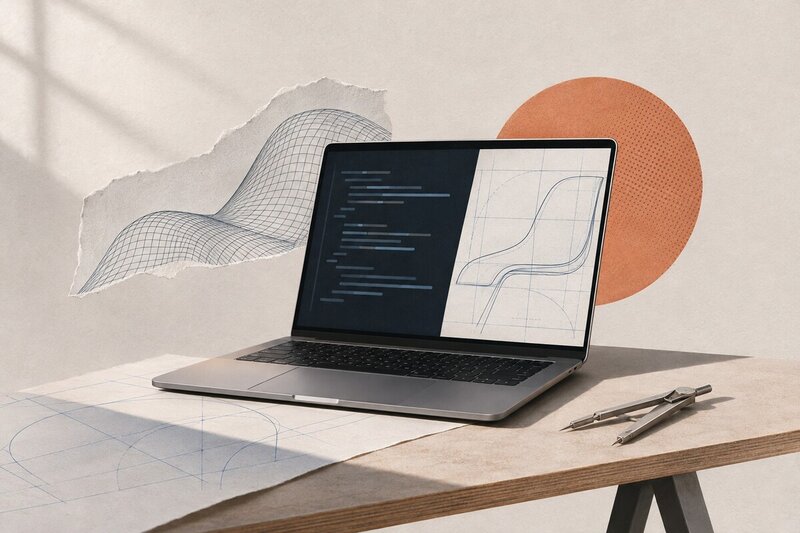
Z.ai built GLM-5.4 for coding work beyond software, adding image input and a looped transformer that reuses layers so engineers and designers can work across code, mechanical design and 3D modeling in one model. It is the company's first flagship on that architecture, running a layer block again instead of stacking more of them.
The model sends 28 layers through a second pass to deepen reasoning without a matching jump in parameters. Its 1M-token context window and image input let teams keep large project histories and visual references in one session. It is available now through the GLM Coding Plan and Z.ai Chat, with API access coming soon.
Running the same 28 layers twice turns model depth into a compute tradeoff rather than a parameter race, giving teams another way to buy reasoning power for software engineering, cybersecurity and design tasks. Availability inside Z.ai's coding plan and chat products widens its role from code generation to broader technical workflows.
Image Credit: AI-generated
Why This Trend Is Growing
- Looped Transformer Models
- Reusable layer architectures shift AI scaling from parameter expansion toward compute-efficient reasoning, creating new openings for advanced technical work across coding, design, and analysis.
- Multimodal Engineering Assistants
- AI systems that combine image input, long context, and code capabilities broaden support for complex project workflows spanning software, mechanical design, and 3D modeling.
- Extended Context Workflows
- Million-token context windows enable teams to maintain large histories, specifications, and visual references inside a single AI session, improving continuity for high-complexity technical projects.
Industries Being Reshaped
- Artificial Intelligence
- Layer reuse introduces alternative model-building economics that may reduce dependence on ever-larger parameter counts while expanding reasoning performance.
- Software Development
- Coding platforms gain value as broader technical copilots when they support cybersecurity, architecture review, and cross-functional engineering documentation within one interface.
- Industrial Design
- Design teams can benefit from AI tools that interpret visual references and technical context together, connecting 3D modeling and mechanical workflows with computational reasoning.
Featured Reports

Why Fragrance Is Finding Its Way Into Everything
The Death of Nuance