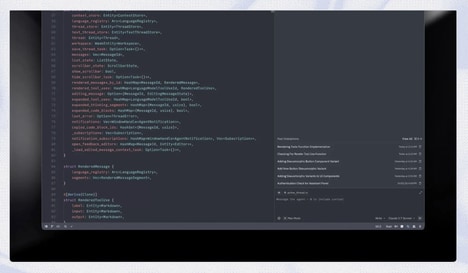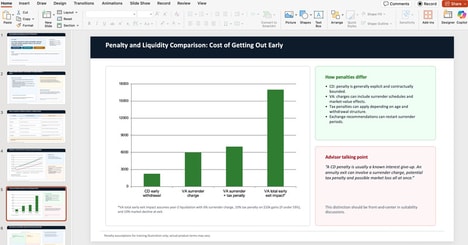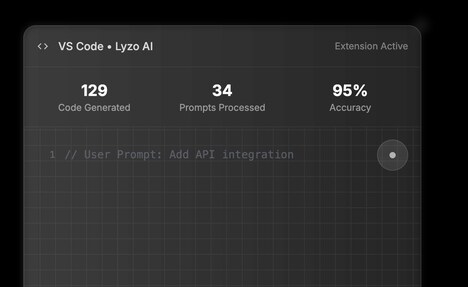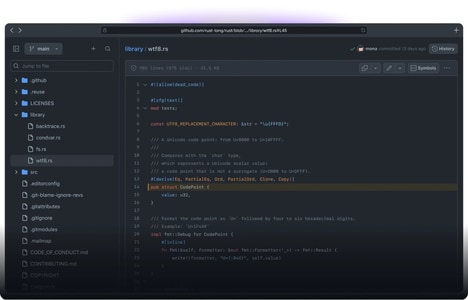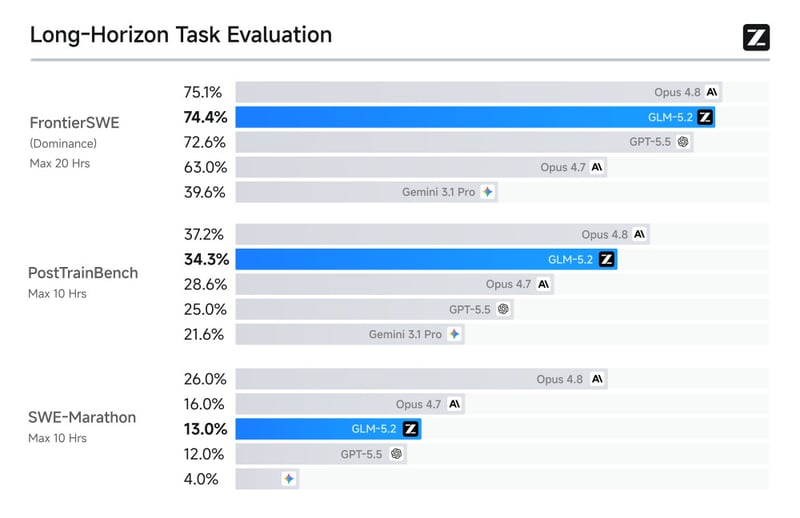
Long-horizon AI is advancing enterprise AI by enabling models to manage complex, multi-step tasks over extended periods rather than responding to isolated prompts. GLM-5.2 introduces a 1M-token context window, enhanced agentic coding capabilities, and architectural improvements that support sustained reasoning, software development, debugging, and research workflows. The model is also designed to balance performance and computational efficiency while improving throughput for long-context inference, making large-scale AI applications more practical.
For businesses, this signals a shift toward AI systems that can oversee complete projects with less human intervention, increasing productivity for engineering, research, and technical teams. Organizations building AI-powered products may also reduce infrastructure costs through more efficient long-context processing while expanding the types of workflows AI can automate. As enterprises adopt increasingly autonomous AI agents, long-horizon reasoning is becoming a key competitive capability across software development and knowledge-intensive industries.
Image Credit: Z.ai
Why This Trend Is Growing
- Long-horizon Agents
- Enterprise systems with million-token memory create room for autonomous AI platforms that manage complex projects across planning, execution, debugging, and review.
- Efficient Long-context Computing
- Lower-cost inference for extended context windows reshapes the economics of deploying AI across research, compliance, engineering, and knowledge-management workflows.
- Agentic Software Development
- AI models capable of sustained coding and debugging enable new development environments where software creation becomes more continuous, automated, and context-aware.
Industries Being Reshaped
- Enterprise Software
- Project-spanning AI capabilities expand the market for productivity platforms that coordinate technical work, documentation, and decision-making with reduced human oversight.
- Cloud Computing
- Demand for scalable long-context inference supports infrastructure services optimized for throughput, memory efficiency, and enterprise-grade autonomous AI workloads.
- Research and Development
- Knowledge-intensive teams benefit from AI systems that can synthesize large datasets, track hypotheses, and support extended investigative workflows across scientific and technical domains.