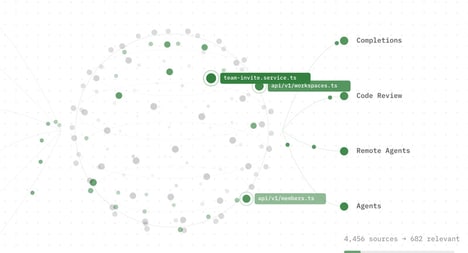
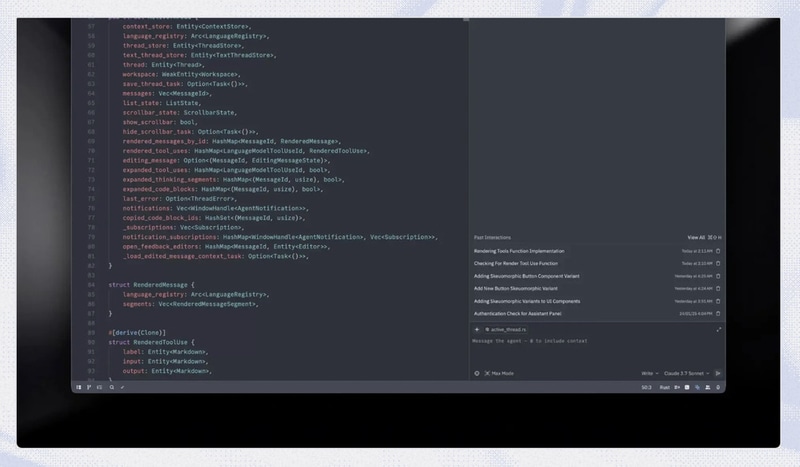
A Code Editor dubbed Zed is a high-performance code editing environment designed to support fast, collaborative software development. The platform is built with a focus on speed and responsiveness, aiming to reduce latency in large codebases and support real-time collaboration between developers and AI tools.
It enables multiple contributors to work within the same project space, streamlining coordination and reducing friction in team workflows. Zed also integrates AI-assisted capabilities intended to accelerate common development tasks such as code navigation, generation, and refactoring. This reflects a broader trend in software tooling toward tighter integration between human developers and AI-driven assistance. For engineering teams, such tools can improve productivity, shorten feedback loops, and enhance collaboration, particularly in distributed environments where real-time interaction and performance are critical to efficient software delivery.
Image Credit: Zed
What Makes This Trend Stand Out
- Real-time Collaborative Ide
- This trend reflects code editors that allow multiple developers and AI agents to edit the same workspace simultaneously, reducing merge friction and speeding iteration cycles.
- AI-assisted Code Generation
- Tools increasingly embed generative models for navigation, refactoring, and snippet creation, shifting cognitive load from rote tasks to higher-level design decisions.
- Low-latency Editing for Large Codebases
- Performance-optimized editors prioritize minimal input-to-response time in massive repositories, altering expectations for tooling responsiveness across distributed teams.
Sectors Adopting This
- Software Development Platforms
- Platform providers that integrate collaborative, AI-driven editing features can redefine developer workflows and differentiate via productivity-centric experiences.
- Devops and Ci/cd Tools
- Continuous integration and delivery ecosystems are being influenced by real-time collaboration capabilities that compress feedback loops between code authors and build/test pipelines.
- Remote Work and Distributed Teams
- Distributed engineering organizations are experiencing shifts in coordination models as synchronous, low-latency collaboration tools enable more immediate cross-location code reviews and pair programming.