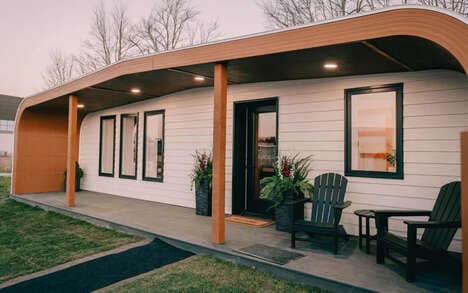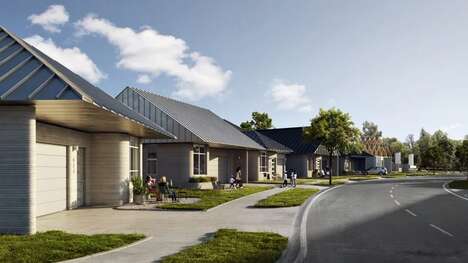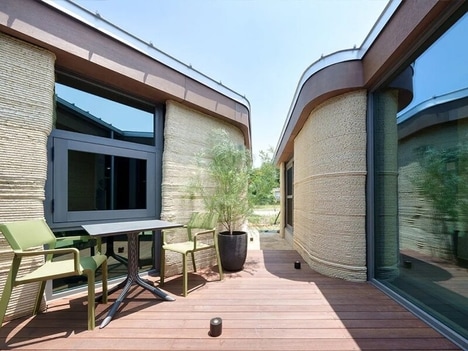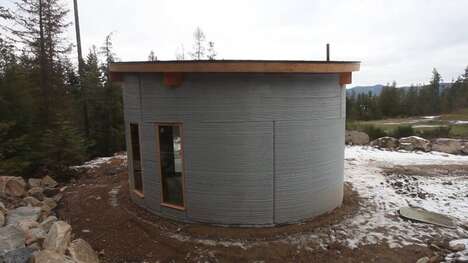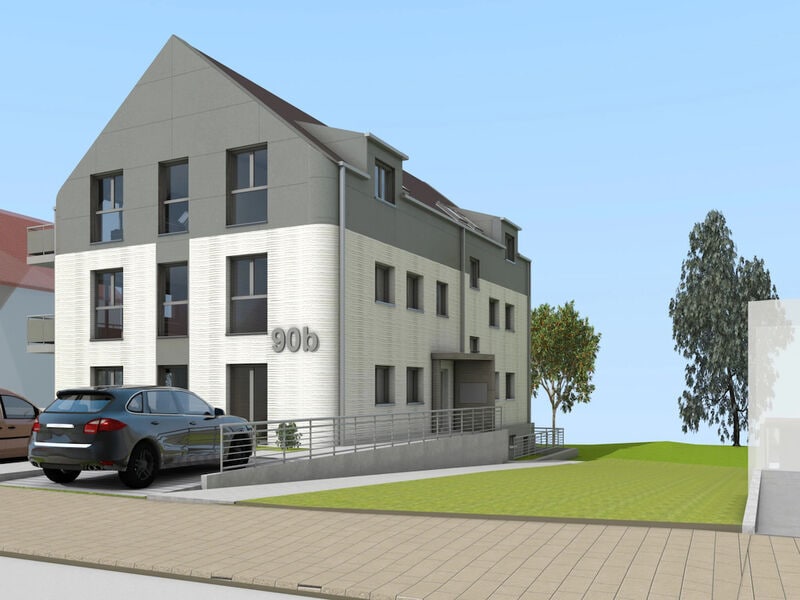
Cobod presents images of what would be the new social housing project in Lünen, Germany. It is the first publicly funded multiple-family house that would be made entirely from 3D-printing technology. It marks the progressive construction methods whilst also tapping into the concerns of public housing subsidies. The team takes into consideration that 3D-printing technology could be a progressive solution to housing issues as it lowers costs and accelerates certain processes.
The multi-family home is made to have three floors -- each one would have two apartment units and result in six per building in total. The Minister for Home Affairs, Municipal Affairs, Construction, and Digitalization of the state of North Rhine-Westphalia, Ina Scharrenbach states, “With the pioneering project in Lünen, we are showing that public housing can be built quickly, modernly, and sustainably despite these challenging times."
Image Credit: Cobod
Key Themes Behind This Trend
- 3d-printed Social Housing
- The use of 3D-printing technology for constructing social housing presents disruptive innovation opportunities in the construction industry.
- Progressive Construction Methods
- The adoption of progressive construction methods in the creation of 3D-printed social housing opens up disruptive innovation opportunities for the building sector.
- Lower Costs and Accelerated Processes
- The ability of 3D-printing technology to lower costs and accelerate construction processes provides disruptive innovation opportunities in the housing industry.
Where This Applies
- Construction Industry
- The construction industry can leverage 3D-printing technology to disrupt traditional construction methods and improve efficiency in building social housing.
- Building Sector
- The building sector can benefit from the adoption of progressive construction methods, such as 3D-printing, to revolutionize the creation of social housing.
- Housing Industry
- The housing industry can explore the use of 3D-printing technology to innovate and address housing issues by reducing costs and expediting construction processes.