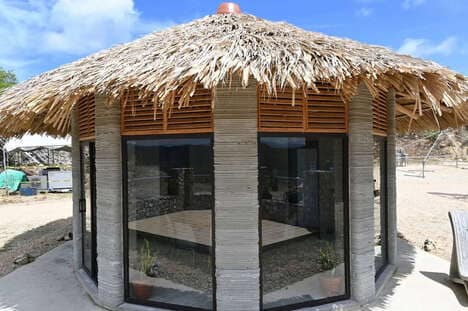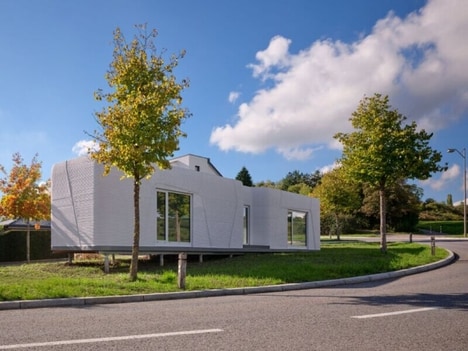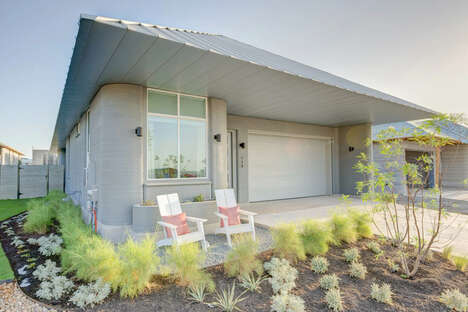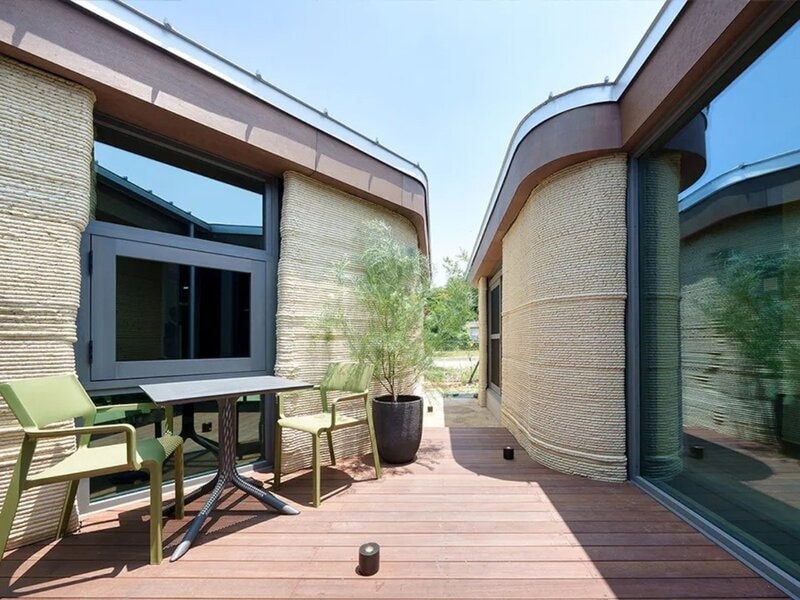
The Lib Earth House reimagines homebuilding by using large-scale 3D printing to layer a soil, lime, and natural fiber mix instead of traditional cement, achieving smooth, curved walls that echo organic forms. Located in Kumamoto Prefecture, Japan, the single-story structure embraces a future-forward aesthetic rooted in regional materials. Printed shell construction dramatically shortens build time and precisely minimizes waste, while the earthen palette blends the design naturally into the landscape.
Beyond its exterior, the interior offers flexible layouts with generous glazing and open volumes, tailored for adaptability. The construction process allows built-in features like textured wall surfaces and integrated niches—hard to achieve with conventional methods. Engineered for seismic resilience, the house meets high structural standards and can be dismantled and returned to soil at end of life, reinforcing its circular ethos. Lib Earth House is a tactile exploration of how form, function, and sustainability can merge seamlessly.
Image Credit: Lib Work
What Makes This Trend Stand Out
- Sustainable Construction Techniques
- A shift towards soil-based 3D printing in construction introduces eco-friendly methods that reduce environmental impact.
- Circular Economy Architecture
- Building designs that can be returned to the earth at the end of their life cycle offer sustainable and recyclable solutions in architecture.
- Seismic-resilient Design
- Incorporating seismic resilience into innovative construction allows for structures that can withstand natural disasters while maintaining sustainability.
Sectors Adopting This
- 3D Printing
- Advancements in large-scale 3D printing technology enable eco-friendly and efficient building processes that can revolutionize the construction industry.
- Eco-conscious Construction
- Utilizing natural, regionally sourced materials in construction supports environmental sustainability and reduces carbon footprints in building projects.
- Sustainable Design and Architecture
- Architectural designs that prioritize adaptable, flexible spaces harmonize with sustainability efforts and cater to dynamic lifestyle changes.