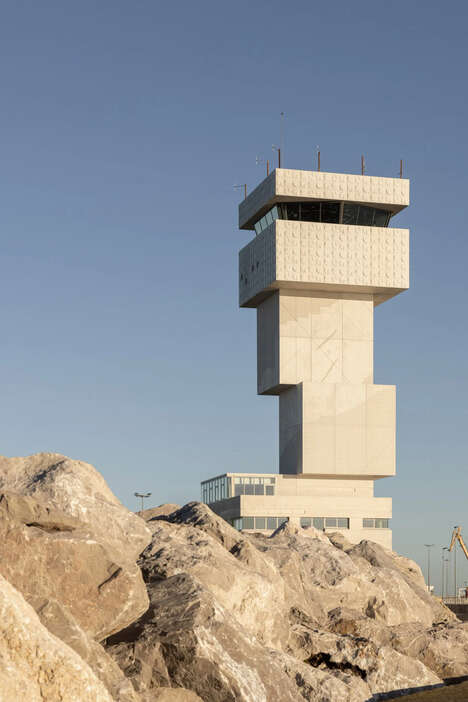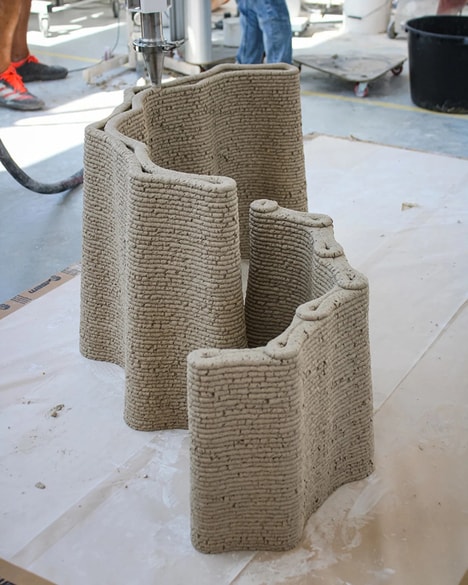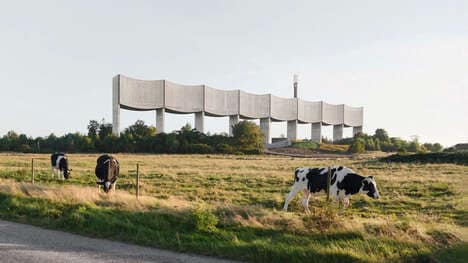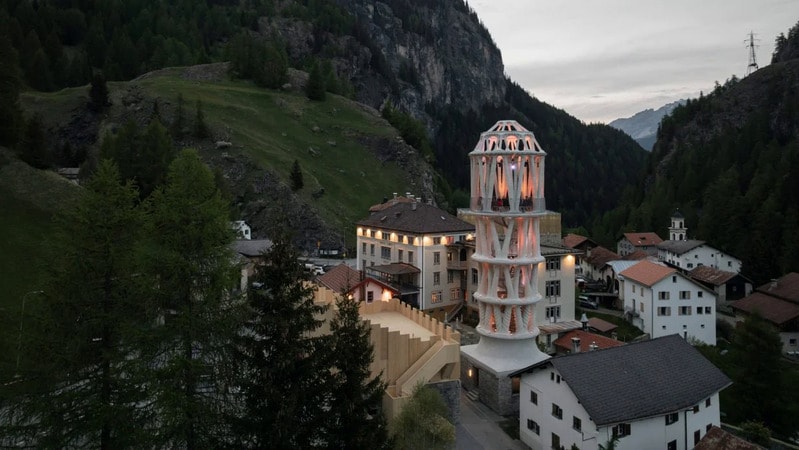
Nova Fundazium Origen works with a few collaborators to bring the Tor Alva to life, otherwise known as White Tower. It is comprised by a range of organic concrete columns which have been 3D printed. The shape of the building is inspired by the build of a layered cake, which is a direct nod to the emigration heritage of confectioners from Graubünden.
The team explained, "While one robot applies the concrete in layers, a second places a ring-shaped reinforcement in the new structure every 20 centimetres. This horizontal reinforcement in the form of rings is supplemented by longitudinal rebars that are added after printing. [...] or Alva showcases how digital construction techniques can be used to build load-bearing structures without formwork."
Image Credit: Benjamin Hofer
Why This Trend Is Growing
- 3d-printed Architecture
- The advent of 3D printing in architecture allows for complex, customized structures to be constructed efficiently with less material waste.
- Organic Design Aesthetics
- Incorporating natural and organic aesthetics in architectural designs inspires environmentally integrated urban landscapes.
- Robotic Construction Automation
- Robotic systems layered alongside traditional methods streamline the construction process, marrying precision with enhanced structural integrity.
Industries Being Reshaped
- Construction Technology
- Emerging construction technologies focus on automation and material innovation to improve productivity and sustainability in the building sector.
- Architectural Design
- Architectural design leverages advanced techniques and materials, influencing the evolution of modern urban environments.
- Sustainable Engineering
- The sustainable engineering industry aims to reduce environmental impact through innovative building practices and materials.