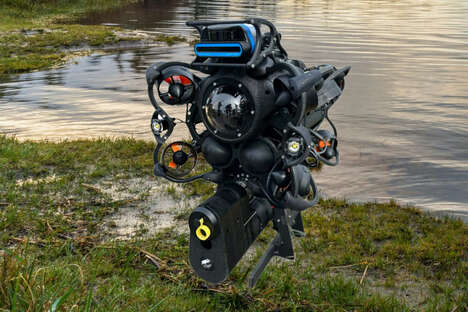
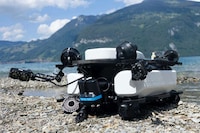
Since August 2018, an underwater drone named RangerBot has monitored the status of the Great Barrier Reef, but researchers at Queensland University of Technology have decided to rebrand the drone as LarvalBot for its new ecological mission. Built to spread coral babies along the reef, Larvalbot will be filled with a coral spawn that has not yet succumb to coral bleaching.
The drone will begin its journey in November during the next large-scale spawning. With the use of LarvalBot, the coral larvae should spread 100 times faster when compared to natural procedures. Two or three drones would be capable of spreading 1.4 million larvae which could be dispersed over an area of 1,500 square meters. According to Professor Matthew Dunbabin, leader of the robotics team at QUT, “This has the potential to revolutionize coral restoration on reefs worldwide.”
Image Credit: Queensland University of Technology
What's Driving This Trend
- Coral Restoration Drones
- Developing drones or underwater vehicles to help with coral restorations can be a potential trend to save and restore coral reefs faster.
- Autonomous Ecological Mission
- The development of autonomous technologies like LarvalBot for ecological missions can pave the way for future advancements in ecological research.
- Robotic Marine Conservation
- The use of robots or unmanned vehicles can help save marine lives by addressing the challenges of coral bleaching and other marine life threats.
Who This Affects Most
- Robotics Industry
- The robotics industry has opportunities in developing marine robots for ecological missions such as coral restoration.
- Marine Conservation Industry
- The marine conservation industry can explore the potential of using technology such as LarvalBot to restore marine habitats and promote sustainable living.
- Ecological Research Industry
- The ecological research industry can benefit from autonomous underwater vehicles like LarvalBot to gather ecological data and study marine ecosystems.