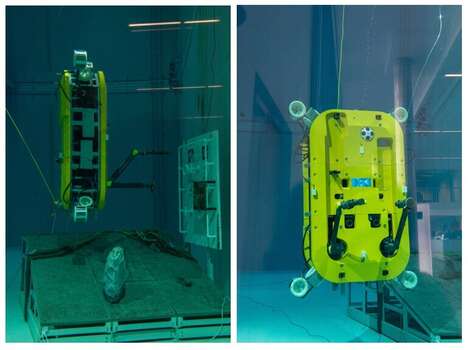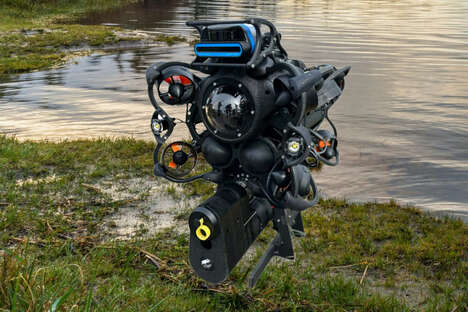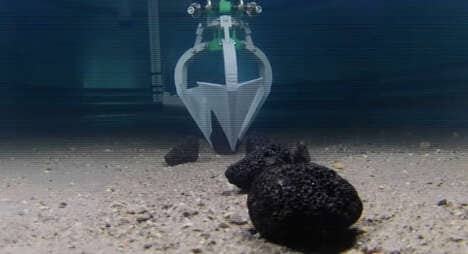
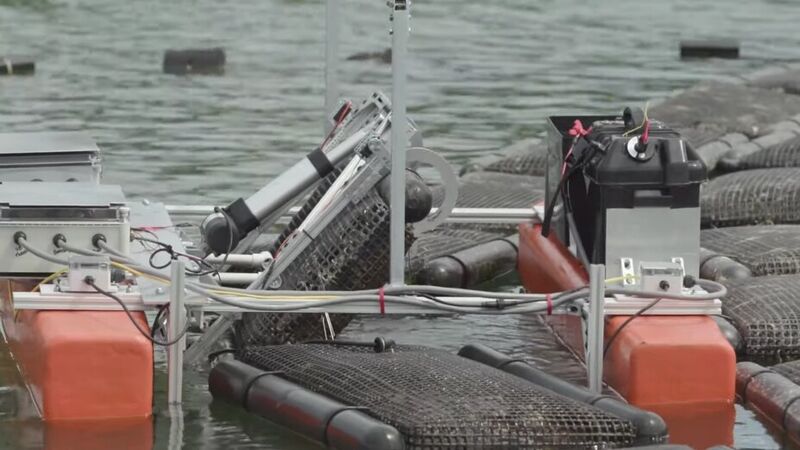
A group of students and researchers at MIT have developed an innovative new water robot that is designed to make it easier than ever to safely and precisely catch oysters whilst ensuring that there is adequate water flow in order to ensure their survival and quality.
The 'Oystamaran' uses a special robotic arm to maintain a grip on either side of the oyster bag, which it then hauls up, lifts and flips in order to capture the oysters safely. The main advantage of this mechanism is that it makes it far easier to flip the bags over compared to when human catchers are deployed.
The current version of this oyster-catching water robot is operated using remote control, but future iterations are set to be able to achieve completely autonomous operation, with cameras utilized to identify and align bags before they are flipped.
Image Credit: John Freidah / Lauren Futami / MIT
Key Themes Behind This Trend
- Water Robotics
- Developing water robots can revolutionize the harvesting of certain marine species, which might not even been possible without robotic technologies, as they can aid and improve the quality of production while ensuring the survival of certain animals.
- Autonomous Farming
- The development and implementation of autonomous farming technologies can improve the efficiency of farming and related supply chains by reducing the dependency on manual labor and ensuring precise, data-driven approaches to planting and harvesting.
- AI-based Aquaculture
- Integrating AI into the aquaculture industry can improve yields, reduce costs associated with human labor needs, and ensure sustainable practices that protect marine environments.
Where This Applies
- Robotics Industry
- The Robotics industry can expand its scope by creating robotic technologies that can aid and improve marine species' harvesting, allowing for a more efficient process, reducing risks to human labor and optimizing the animals' survival.
- Agriculture Industry
- The Agriculture industry can benefit from autonomous harvesting machines, which can reduce the costs of labor and achieve more exact and precise harvesting, improving product quality and production capacity.
- Aquaculture Industry
- The Aquaculture Industry can leverage AI-based technologies to boost production and improve their sustainability practices, while maintaining the highest quality standards in seafood, obtaining competitive advantages.