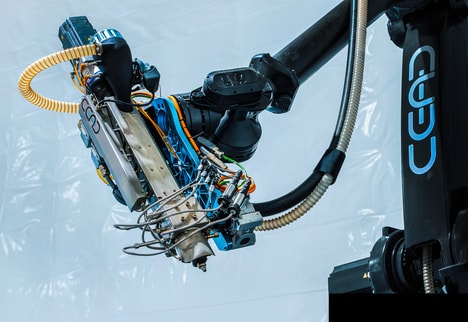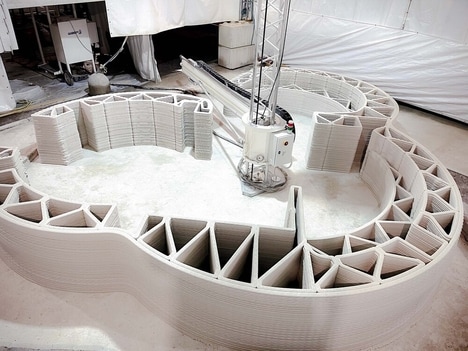
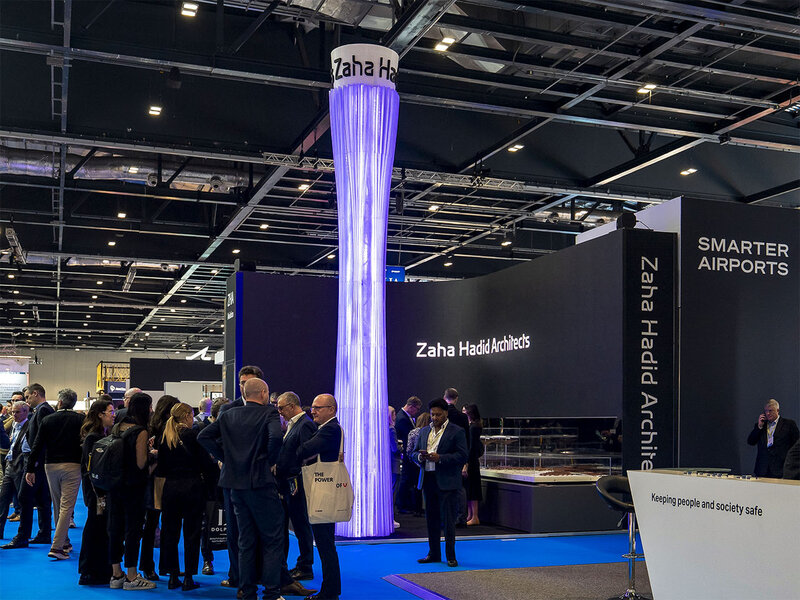
Large-scale printed architecture is expanding the role of additive manufacturing by enabling architects to create full-scale structures that combine complex design with efficient production. The collaboration between WASP and Zaha Hadid Architects demonstrates this shift through a six-meter-tall 3D printed air traffic control tower model created for the Passenger Terminal Expo 2026. Produced using robotic arm 3D printing and fire-resistant PETG material, the installation showcases how large-format additive manufacturing can deliver intricate architectural forms while reducing fabrication constraints.
For businesses, robotic 3D printing offers new opportunities to streamline the production of customized architectural components, exhibition structures and future building elements. Automated manufacturing can reduce material waste, shorten production timelines and make complex geometries more practical to fabricate. As large-scale additive manufacturing continues to mature, it is likely to play a growing role in architecture, construction and industrial design by supporting faster, more flexible project delivery.
Image Credit: WASP and Zaha Hadid Architects
What's Driving This Trend
- Robotic Printed Structures
- Robotic arm fabrication is reshaping large-format construction by making complex architectural geometries more feasible, repeatable and resource-efficient.
- Custom Exhibition Architecture
- Temporary installations are becoming showcases for additive manufacturing methods that compress production timelines while enabling highly distinctive brand and spatial experiences.
- Fire-resistant Additive Materials
- Advanced thermoplastics such as fire-resistant PETG are expanding the practical use of 3D printing in public-facing environments with stricter safety requirements.
Who This Affects Most
- Architecture
- Architectural firms can explore new design languages as large-scale printing reduces traditional fabrication limits around curvature, ornamentation and structural modeling.
- Construction
- Construction stakeholders are gaining access to automated building methods that may lower waste, simplify customization and accelerate delivery of specialized components.
- Industrial Design
- Industrial design is being influenced by large-format additive production that supports rapid prototyping, bespoke forms and scalable fabrication for spatial products.