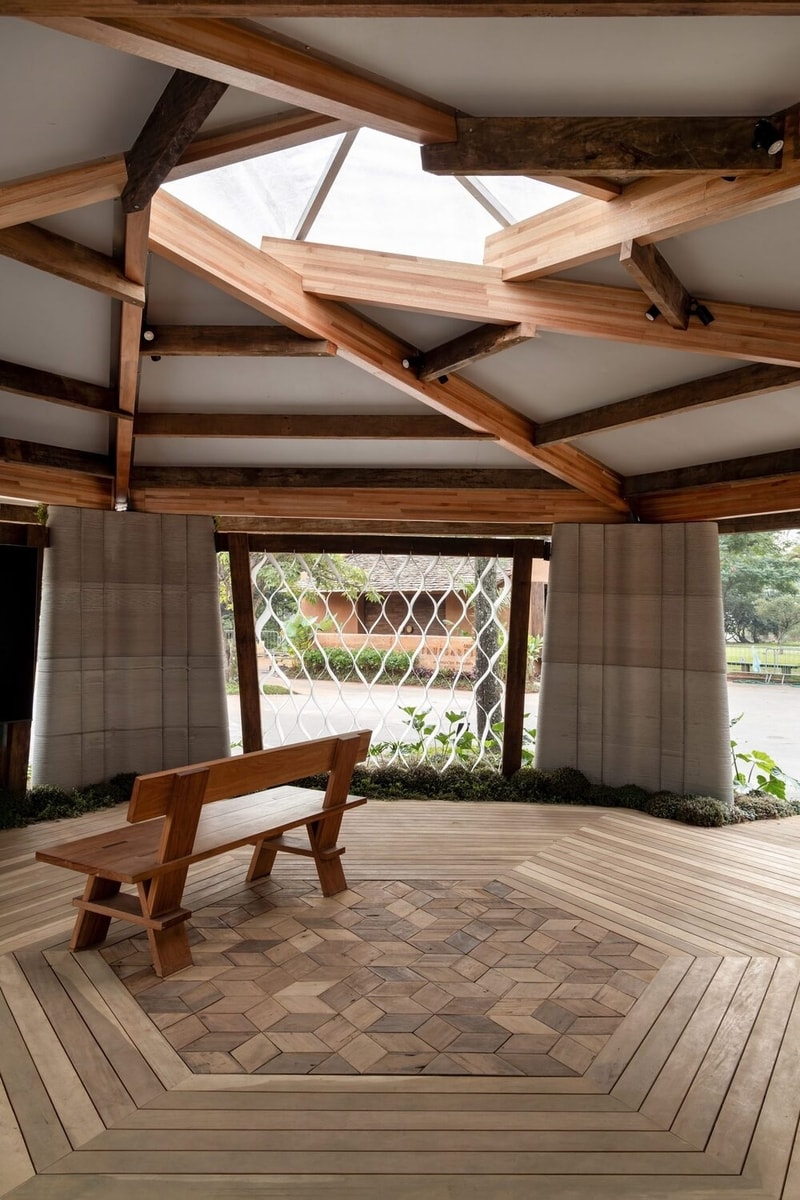
The Superlimão pavilion presents a 3D-printed architectural structure developed for the Pátio Metrópole exhibition at the Brazilian Architecture Biennial. It is comprised of three pavilions and the installation is composed of modular printed elements arranged into a continuous, porous surface that forms walls, openings, and seating zones within a single system. The components are produced using robotic fabrication, generating layered textures that remain visible across the surface. The structure integrates organic curves and varying thicknesses, forming a spatial enclosure defined by repetition and variation.
The pavilion is installed as an open framework with multiple entry points and transitional zones. Printed segments connect into a cohesive assembly that responds to the exhibition layout. The project sits alongside two additional pavilions within the same exhibition, each exploring material systems and fabrication processes through large-scale installation.
Image Credit: Superlimão
Key Themes Behind This Trend
- Modular Robotic Fabrication
- Robotic production of repeatable, connectable modules enables scalable assembly methods that could replace traditional on-site labor and accelerate bespoke building delivery.
- Porous Continuous Surface Architecture
- The integration of openings, seating and circulation into a single porous skin points to new spatial systems that blur boundaries between structure and programmatic elements.
- Visible Layered Aesthetics
- Layered textures left by additive processes create a distinct material language that could redefine surface treatments and product differentiation across built environments.
Where This Applies
- Architecture and Urban Design
- Design firms could leverage large-scale 3D printing to explore responsive, adaptive forms that alter how public space and circulation are conceived.
- Construction Manufacturing
- Componentized, robot-produced building parts present opportunities for offsite prefabrication and new supply chains that change procurement and assembly models.
- Exhibition and Cultural Events
- Temporary installations made from additive manufacturing introduce flexible, sustainably optimized structures that shift expectations for experiential design and reuse.