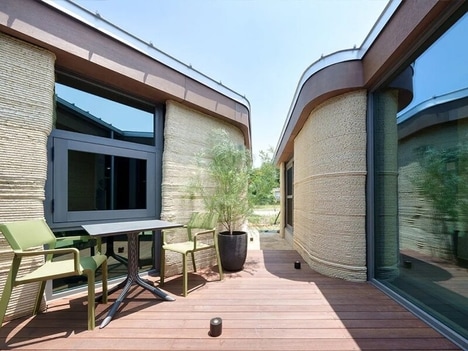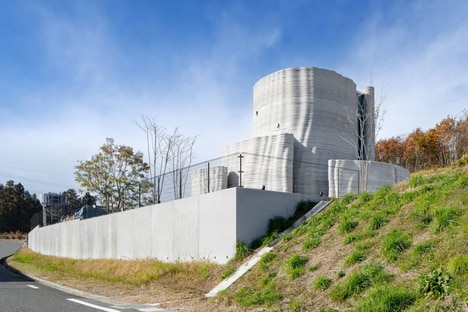
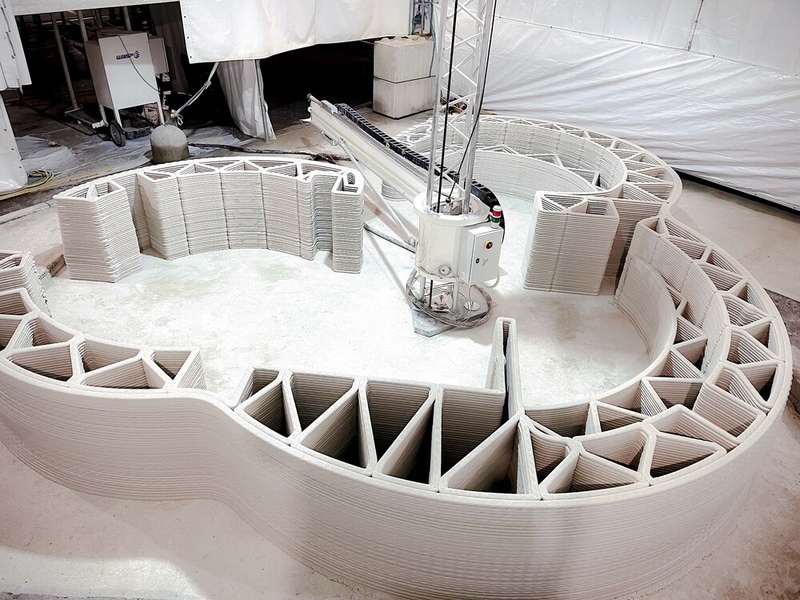
Italy’s first 3D-printed airport service building, ‘Ol Casél,’ at Milan Bergamo Airport was unveiled in December 2025 by WASP, EDILCO and SACBO. The project was completed in just 19 days, with printing taking seven days, followed by the addition of windows, doors and the roof.
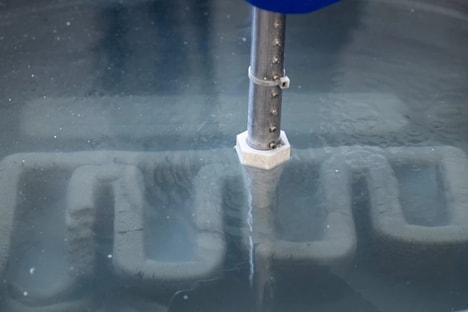
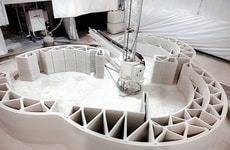
The project was built by ‘CRANE WASP,’ a modular 3D-printing system designed to print both natural materials, including ‘Ol Casél’s’ walls. The walls used a lime-based mixture with low emissions compared to concrete and traditional construction materials, while still meeting regulations.
The system is currently available commercially and is Italy’s first globally marketed architectural 3D printer.
As the construction marketplace continues to explore sustainable alternatives to traditional methods, ‘Ol Casél’ signals how 3D-printing technology can meet the speed and regulatory demands of modern infrastructure projects, especially in high-traffic transportation hubs and urban development zones.
Image Credit: WASP
What's Driving This Trend
- Rapid Modular Construction
- The 19-day build timeline illustrates a shift toward prefabricated, on-site modular printing that drastically reduces project lead times for infrastructure projects.
- Low-carbon Bio-material Printing
- Use of lime-based, low-emission printing mixes indicates material innovation that can lower embodied carbon while meeting regulatory standards for public buildings.
- Commercial Architectural 3D Printers
- The global commercial availability of large-scale printers like CRANE WASP reveals a market for turnkey hardware-software stacks that enable architects and builders to prototype and produce complex forms.
Who This Affects Most
- Airport Infrastructure
- High-traffic transportation hubs stand to benefit from rapidly deployable, code-compliant printed service buildings that can be scaled across terminals and regional airports.
- Urban Development and Housing
- Urban infill and affordable housing programs could be transformed by on-site printing methods that compress construction schedules and adapt footprints to constrained sites.
- Construction Equipment Manufacturing
- Manufacturers of heavy construction machinery may encounter demand for modular, large-format printers and novel dispensing systems optimized for sustainable material chemistries.