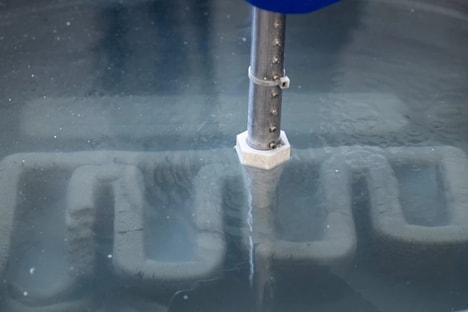
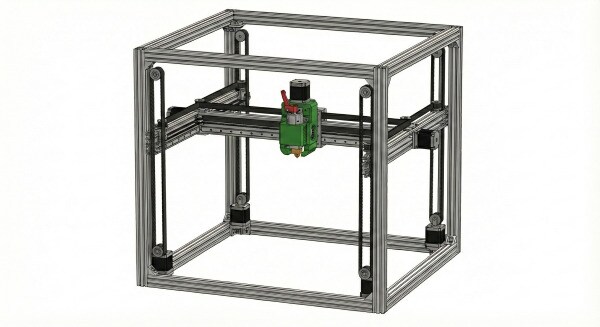
Sunnyday Technologies introduced M3-CRETE, an open-source 3D concrete printer designed for on-site construction use, featuring modular architecture that scales from 1 to 4 cubic meters and a draft bill of materials published on GitHub. The system was built to run on common hardware and open firmware, with compatibility for slicers such as Cura, OrcaSlicer and PrusaSlicer, though nozzle settings require adjustment.
The printer uses swappable components and standard extrusions, motors and controls to enable quick repairs in remote locations, and Sunnyday said it will collaborate with Wisconsin-area universities to support field-test units in 2026. Targeted applications include hardscape elements, agricultural infrastructure, water-control parts and modular construction blocks for residential use.
For builders and distributed manufacturers, M3-CRETE reduces reliance on proprietary systems by prioritizing serviceability and standard parts, making additive construction more accessible in off-grid or rural environments. The open design invites community customization and local adaptation of construction workflows.
Image Credit: Sunnyday Technologies
What Makes This Trend Stand Out
- Open-source Modular Construction Equipment
- An open-source, modular printer architecture that prioritizes standard parts could erode vendor lock-in and foster community-driven customization of building systems.
- Field-ready Off-grid Additive Manufacturing
- Portable, repairable printers designed for remote sites enable localized fabrication of infrastructure components in areas with limited supply chains.
- Distributed Localized Manufacturing
- Shifting production of blocks, hardscape elements and water-control parts to dispersed on-site nodes has the potential to shorten logistics chains and decentralize inventory.
Sectors Adopting This
- Residential Construction
- On-site printing of modular construction blocks could change procurement models by reducing reliance on centralized precast suppliers and enabling tailored, local designs.
- Agricultural Infrastructure
- Farm-level fabrication of bespoke irrigation and water-control components may allow more resilient, site-specific farm infrastructure solutions.
- Equipment Maintenance and Parts
- Standardized extrusions and swappable components point to emergent local service ecosystems for rapid repair and aftermarket parts distribution.