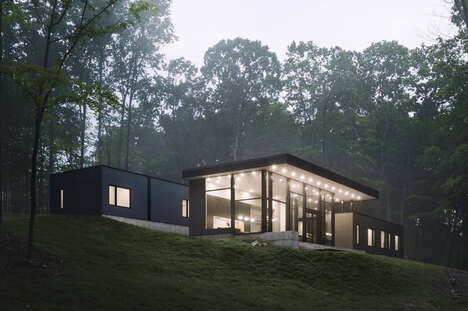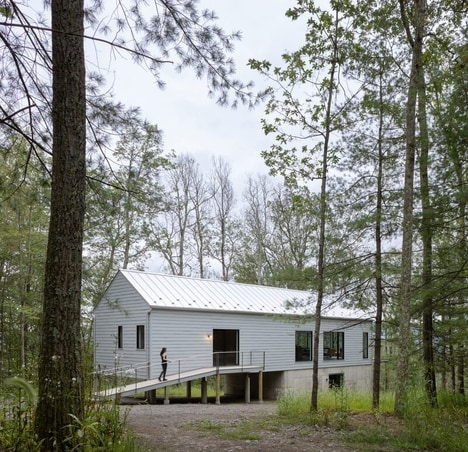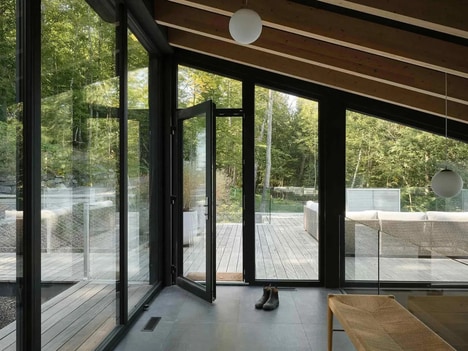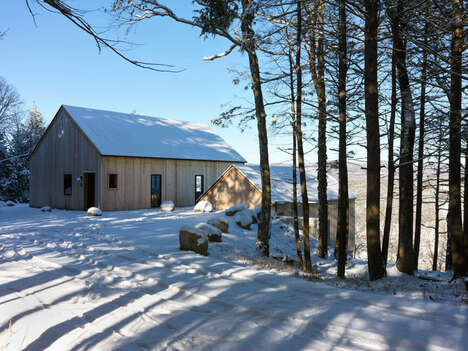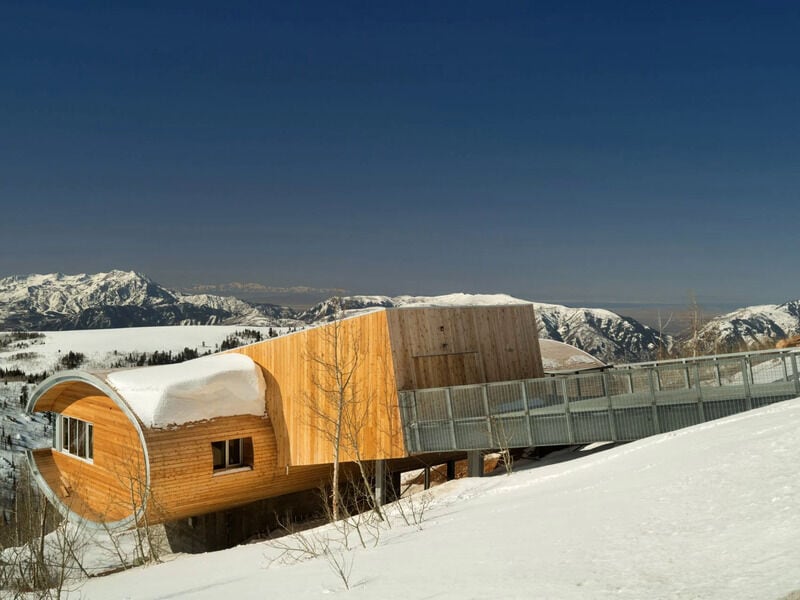
The team at MacKay-Lyons Sweetapple Architects has designed the House at 9,000 Feet. It can be found in the American West area and rests on a foundation supported by stilts and visitors can access the home through a bridge. The dwelling is right on top of a spot in the Intermountain Region and the namesake nods to how it is perched on a mountaintop literally at 9,000 feet above sea level.
The team shares, "A 30 per cent slope across the site combined with an annual snowfall of 40 feet, resulted in a strategy of ‘floating' the building on stilts and accessing it via a bridge." At the entrance is a long and rounded section that measures about 30 meters in length and connects to a box angled downwards.
Image Credit: Nic Lehoux
Why This Trend Is Growing
- Elevated Architecture
- Designing homes on stilts to adapt to steep slopes and heavy snowfall is revolutionizing mountainous living.
- Remote Accessibility Solutions
- Using bridges and elevated pathways to facilitate access to remote homes on challenging terrain paves the way for inhabiting extreme environments.
- Sustainable Mountain Dwellings
- Creating homes that integrate with mountainous landscapes at high altitudes introduces eco-friendly living solutions amidst nature.
Industries Being Reshaped
- Architecture
- Innovations in elevated and floating home designs are pushing the boundaries of traditional architectural practices.
- Construction
- Building techniques that incorporate stilt foundations and slope adaptation are transforming the construction industry.
- Tourism
- Developing unique, accessible dwellings in remote high-altitude locations offers new possibilities for eco-tourism and luxury retreats.