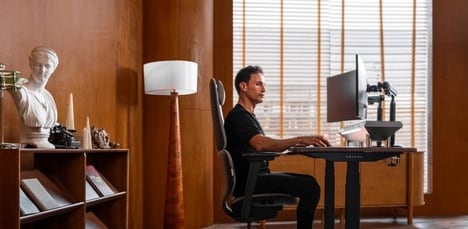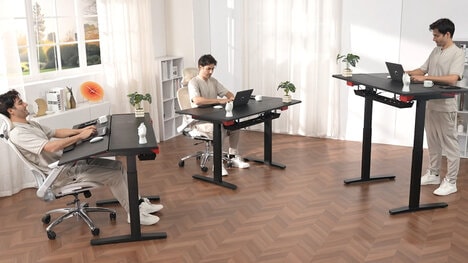
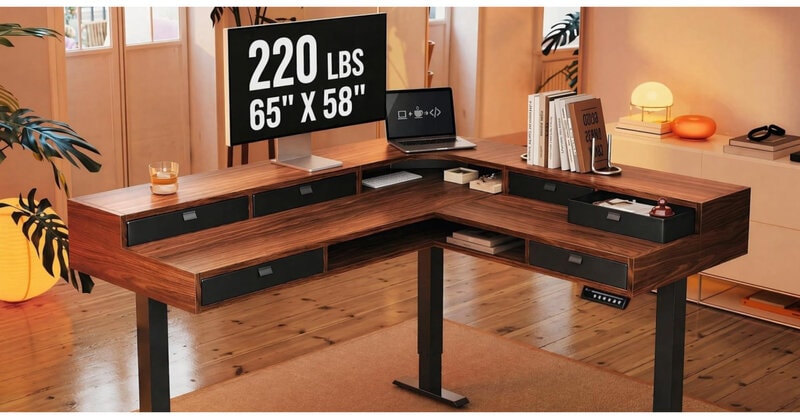
HUANUO released its 65-inch L-shaped standing desk, a spacious sit-stand workstation with a 65-by-58-inch surface, a two-tier layout, and six fabric drawers for storage. It offered electric height adjustment from 27.6" to 46.5" and four programmable memory presets.
A high-strength carbon-steel frame passed 50,000 tests for wobble-free stability, and a wider 55-inch short edge created room for a secondary monitor or a compact printer. A built-in cable-management tray and grommets kept cords tidy, and the Storage Plus system included open compartments and spacious lower openings for supplies. It shipped in two boxes for easier handling and included U.S.-based support.
The desk's adjustable range and storage turned a cluttered workspace into a cleaner, more dynamic setup that supported both sitting and standing. At $160 (reg. $300), it made a feature-rich ergonomic desk accessible to budget-conscious shoppers.
Image Credit: HUANUO
Key Themes Behind This Trend
- Affordable Ergonomic Furniture
- Budget-friendly sit-stand desks are expanding access to wellness-oriented workspace design, creating room for value-driven brands to compete with premium office furniture makers.
- Storage-integrated Workstations
- Desks that combine adjustable surfaces with drawers, shelves, and cable management reflect rising demand for compact productivity hubs in home and hybrid offices.
- Programmable Workspace Comfort
- Memory-preset height controls and electric adjustment features are turning everyday desks into personalized ergonomic systems with mass-market appeal.
Where This Applies
- Home Office Furniture
- The growth of spacious, multifunctional desks signals opportunities for furniture companies to serve remote workers seeking professional-grade setups at accessible prices.
- Workplace Wellness
- Height-adjustable workstations support healthier movement throughout the day, positioning ergonomic products as practical tools within broader employee wellness strategies.
- Consumer Electronics Accessories
- Integrated cable management and monitor-friendly layouts connect desk design with device-heavy lifestyles, opening space for accessory ecosystems built around organized productivity.