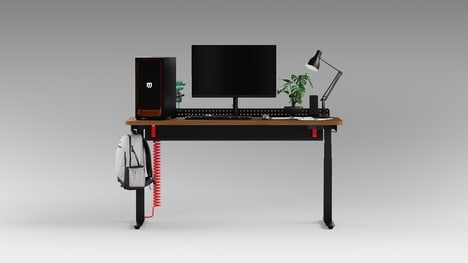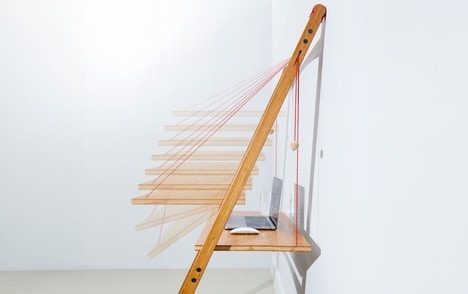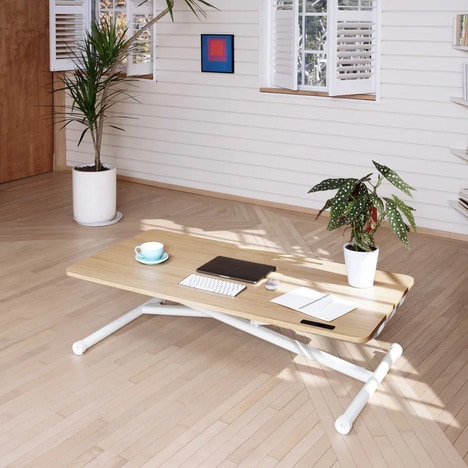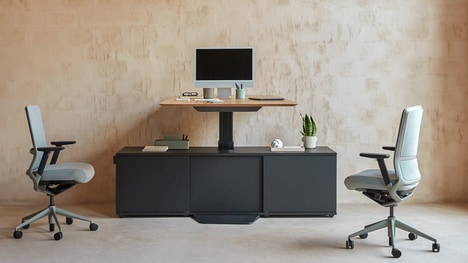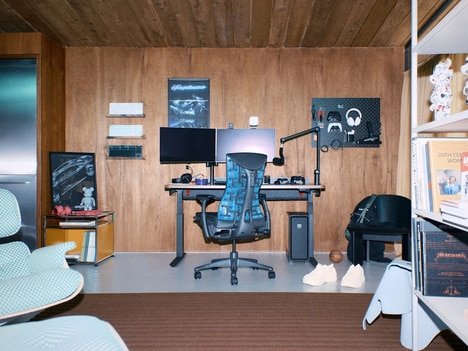
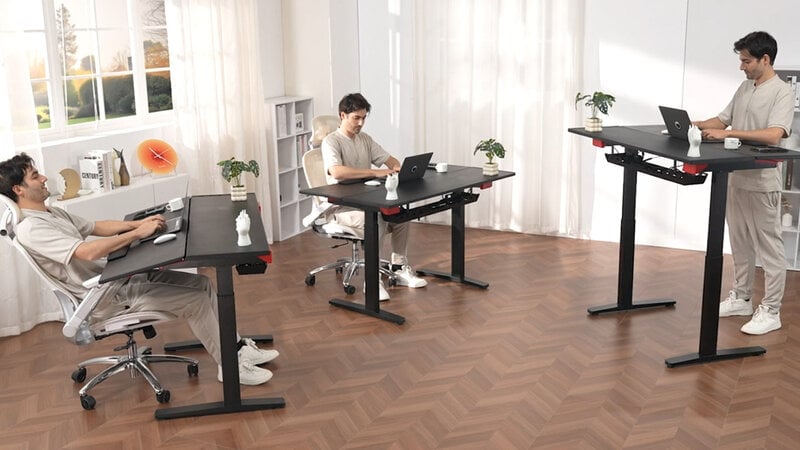
The GTPlayer Zoned-Tilt Standing Desk has been engineered as an advanced piece of ergonomic furniture that keeps adaptability in focus to work well for professionals who spend extended periods at their workstation.
The desk is engineered with a quad-motor setup that will enable it to be transitioned between orientations easily without the need for any manual cranking or adjusting. The system splits the desktop into two sections that will allow the area closest to the user to become slanted as required for an ergonomic profile.
The GTPlayer Zoned-Tilt Standing Desk can be used in a multitude of orientations including as a traditional desk, a standing desk or even a slanted desk that allows the body to embrace a supine form for greater pressure relief.
Image Credit: GTPlayer
Key Themes Behind This Trend
- Zoned Ergonomic Workstations
- Segmented desktop surfaces introduce more personalized posture support for professionals who alternate between typing, reading, sketching, and screen-based tasks.
- Motorized Desk Adaptability
- Four-motor adjustment systems signal a shift toward furniture that can transform quickly between seated, standing, tilted, and reclined working modes.
- Supine Work Design
- Pressure-relieving workstation formats expand the definition of office ergonomics by accommodating reclined body positions during long periods of focused work.
Where This Applies
- Office Furniture
- Adaptive desk architectures create new premium categories for workspace products that combine automation, comfort, and modular surface control.
- Workplace Wellness
- Ergonomic innovations with posture variation features support growing demand for health-focused office environments that reduce strain from prolonged computer use.
- Home Office Technology
- Smart adjustable furniture strengthens the home workstation market by blending productivity equipment with wellness-oriented design for remote professionals.