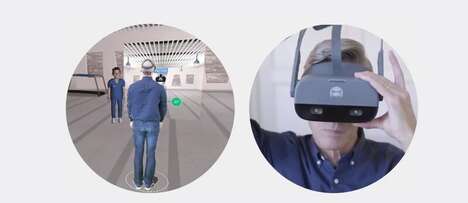
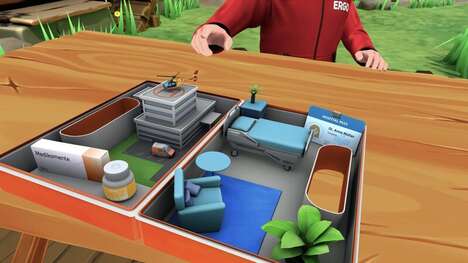
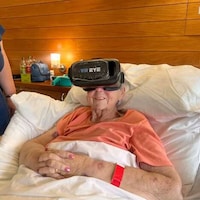
Children's health experiences are extended to the understanding of the little patients themselves with the Health Voyager application by Klick Health. The Toronto-based company partnered with Boston Children's Hospital to develop a VR experience that will help children, undergoing medical procedures such as colonoscopies, better understand the immediacy of their condition and situation.
Health Voyager uses the patient's clinical data and produces a virtual model of their insides. With the help of standard 3D goggles, kids can get a guided tour of their own anatomy.
The VR health experiences, provided by Klick Health's application, allow children to have some agency during diagnosis and procedures. Thus, Health Voyager fosters a certain respect for the little patient and eases the occasional emotional hardship, experienced by parents who are tasked with explaining a medical condition or procedure.
What Makes This Trend Stand Out
- Virtual Reality Healthcare
- Opportunity to develop more VR applications for healthcare to improve patient understanding and engagement.
- Personalized Medical Education
- Disruptive innovation potential in creating personalized educational experiences using VR technology in the medical field.
- Pediatric Healthcare Technology
- Exploring the use of technology, such as VR, to improve pediatric healthcare experiences and empower young patients.
Sectors Adopting This
- Healthcare
- Opportunities for healthcare providers and developers to integrate VR technology into patient care and education.
- Education
- Potential to revolutionize medical education by incorporating VR-based interactive learning tools and experiences.
- Pediatric Healthcare
- Innovation possibilities within the pediatric healthcare sector to enhance patient understanding and emotional well-being through VR technology.