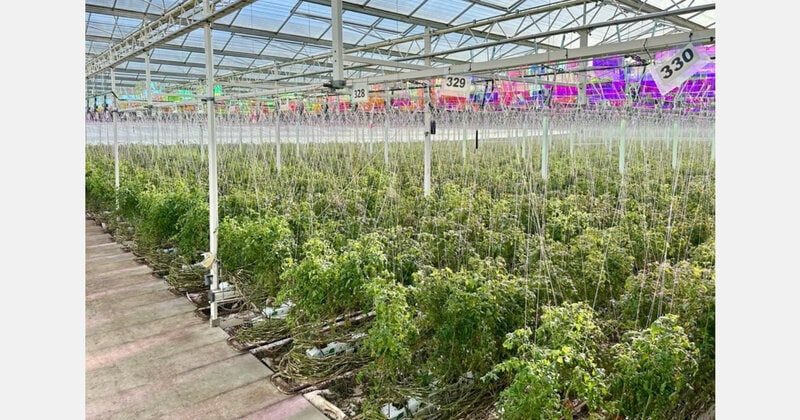
fortyfour is replacing trucked carbon supply with an on-site CO2 unit that pulls gas from the air and sends it straight into a greenhouse. The Swiss startup's first Direct Air Capture system has been running at Meier Gemüse since September 2026, where it helps vegetables grow.
Inside the machine, a liquid solvent binds CO2 from the air and releases it when warmed, sending the gas into the greenhouse's existing pipes. Because the process works at low temperatures, it can run on electricity or on waste heat already available on site, and it fits on just a few square meters.
On-site capture reduces dependence on fossil CO2 deliveries that can be delayed or disrupted. It also gives growers a local supply option at a time when carbon sourcing is becoming harder to treat as a simple logistics problem.
Image Credit: fortyfour
Why This Trend Is Growing
- On-site Carbon Capture
- Compact direct air capture systems create new value by turning greenhouse-adjacent infrastructure into localized CO2 supply hubs.
- Low-temperature Climate Tech
- Waste-heat-compatible capture processes broaden adoption potential for farms and facilities seeking lower-cost carbon inputs.
- Agricultural Supply Resilience
- Localized CO2 production reduces exposure to disrupted fossil-carbon logistics while supporting more predictable crop-enhancement operations.
Industries Being Reshaped
- Controlled-environment Agriculture
- Greenhouses can integrate captured atmospheric carbon into existing growth systems, reshaping how yield optimization resources are sourced.
- Carbon Capture Technology
- Small-footprint DAC units signal a market shift from centralized sequestration projects toward distributed industrial and agricultural applications.
- Sustainable Farming
- Electrified or waste-heat-driven CO2 supply models align crop production with emerging expectations for lower-impact agricultural inputs.