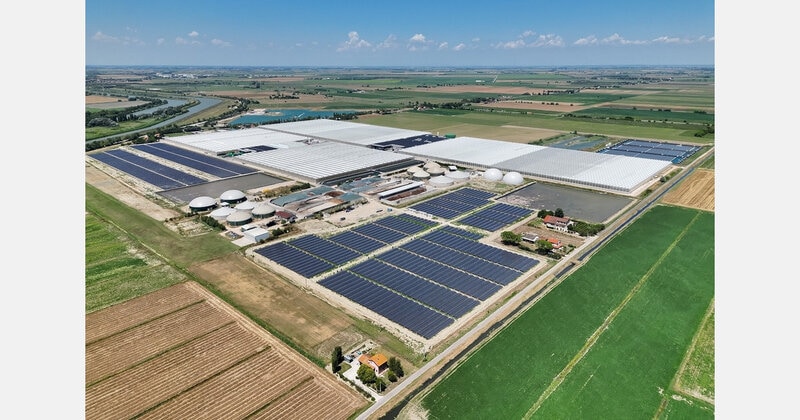
Fri-El Green House is adding a deep geothermal plant to its hydroponic greenhouses in Ostellato, giving the tomato operation a way to heat and cool crops with underground energy. The setup is designed to help the company keep growing conditions steady through extreme summer weather.
The project calls for four wells drilled to 2.5 kilometres, plus an underground thermal store built to hold summer heat for winter use. Fri-El already runs 31 hectares of greenhouses and plans to expand the site to 60 hectares as the system comes online. Its crop mix includes vine tomatoes, cherry tomatoes, datterino, cocktail, miniplum and oblong types, along with cucumbers and snack peppers.
The appeal behind this innovation is control: steady temperatures, year-round production and less dependence on outside weather. It also shows how greenhouse farming is moving toward cleaner energy systems that support both growth and climate resilience.
Image Credit: Fri-El
Why This Trend Is Growing
- Geothermal Greenhouses
- Underground thermal energy is reshaping controlled-environment agriculture by stabilizing crop conditions while reducing reliance on fossil-fuel heating and cooling.
- Climate-resilient Farming
- Extreme weather volatility is creating demand for agricultural infrastructure that maintains productivity through temperature control, energy storage and protected growing systems.
- Seasonal Thermal Storage
- Storing excess summer heat for winter use introduces new efficiency models for farms, campuses and industrial sites seeking lower-carbon climate regulation.
Industries Being Reshaped
- Controlled-environment Agriculture
- Hydroponic and greenhouse operators are gaining new pathways to scale year-round production through integrated renewable energy and precision climate systems.
- Renewable Energy
- Deep geothermal systems are expanding beyond power generation into agricultural heating and cooling, opening new commercial markets for subsurface energy.
- Food Production
- Fresh produce supply chains can become more stable as energy-independent greenhouse facilities reduce exposure to seasonal shortages and climate disruptions.