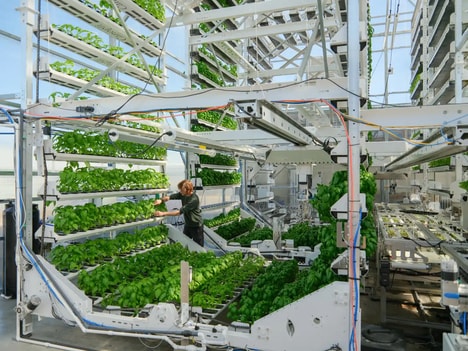
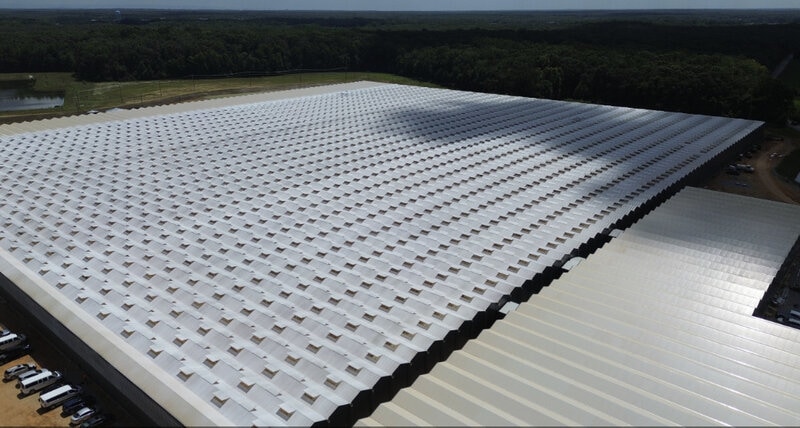
Little Leaf Farms, one of the largest and fastest-growing packaged salad brands in the United States, has begun commissioning a new 20-acre greenhouse in Manchester, Tennessee, which represents the first phase of a larger campus that can eventually expand to 80 acres. The company has accelerated this timeline due to strong demand from both retailers and consumers for its controlled-environment leafy greens.
Little Leaf Farms' new facility, which will become the highest-volume indoor leafy green operation in the world once fully operational, uses advanced hydroponic systems, natural sunlight, purified rainwater, and automated seeding, growing, harvesting, and packaging processes. These serve to eliminate direct human contact with the plants. The company also employs water purification to remove pathogens and avoids the use of pesticides, herbicides, or fungicides throughout production.
The brand’s emphasis on a "Clean From the Start" approach, with purified water and no human handling, directly responds to growing public awareness of foodborne illness outbreaks associated with field-grown leafy greens.
Image Credit: Little Leaf Farms
Why This Trend Is Growing
- Scaled Controlled-environment Greens
- Large phased greenhouse campuses signal new models for year-round produce supply that can reduce weather volatility, regionalize distribution, and challenge conventional field agriculture.
- Contactless Food Production
- Automated seeding, harvesting, and packaging systems create differentiation around food safety while opening possibilities for higher-trust fresh food brands.
- Pathogen-free Water Systems
- Purified rainwater and closed-loop hydroponics highlight emerging infrastructure for cleaner crop inputs and lower dependence on chemical treatments.
Industries Being Reshaped
- Indoor Agriculture
- High-volume hydroponic greenhouse expansion reflects a shift toward industrialized growing platforms capable of serving national retail demand.
- Packaged Produce
- Consumer concern over foodborne illness is reshaping salad packaging and branding around traceability, cleanliness, and reduced human contact.
- Agricultural Automation
- Robotics and automated handling technologies are becoming central to scalable fresh produce operations with labor efficiency and contamination control advantages.