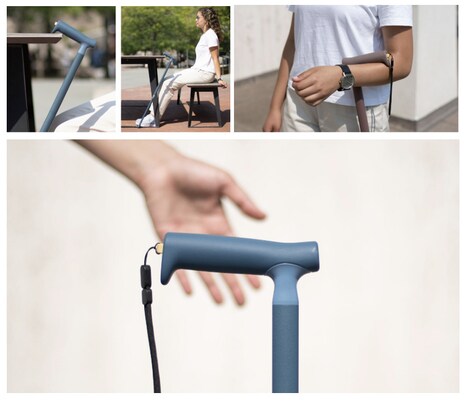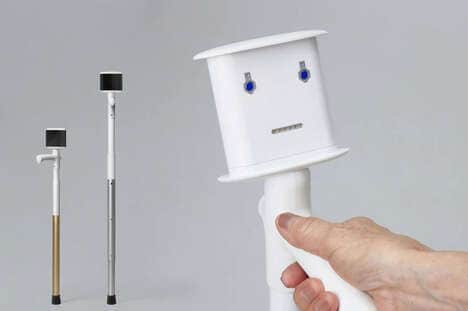

For those lucky enough to use crutches on a temporary basis, the road to recovery will gradually have you requiring less support from your external prosthetic devices. The Fulcrum Crutch takes a patient's improvement into account, unlike many examples of assistive medical and physio-therapeutic equipment.
This clever apparatus can be adjusted to change from a forearm style support to a cane. The idea is that the sufferer of a broken leg or a twisted ankle might begin with two walking sticks with the supportive cuffs and progressively graduate to a single stick with a comfortable handgrip.
Arman Kirim's ergonomic Fulcrum Crutch reduces the need for more pieces of specialized clinical accoutrements and it bridges the gap to better aid people throughout further stages of their recuperation.
What's Driving This Trend
- Adjustable Assistive Devices
- The Fulcrum Crutch demonstrates the need for adaptable and personalized assistive devices to better support patients' recovery journeys.
- Ergonomic Medical Equipment
- Innovation in ergonomic design for medical equipment can improve comfort and reduce the need for multiple pieces of specialized apparatus.
- Progressive Rehabilitation Tools
- The Fulcrum Crutch highlights the importance of gradual adaptation and progression in rehabilitation equipment to support patients' recovery needs.
Who This Affects Most
- Medical Devices
- The medical devices industry could benefit from developing adjustable and ergonomic equipment that can better accommodate the varying needs of patients throughout their recovery processes.
- Physical Therapy
- The physical therapy industry could utilize adjustable and progressive rehabilitation tools to personalize patient treatments and facilitate more effective healing.
- Orthopedics
- Orthopedic companies can explore innovative and adaptable assistive devices to improve patient experience and outcomes in post-injury or post-surgical recovery.