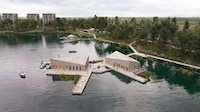
Architect Vincent Callebaut designed a floating ferry terminal for Seoul with "a form that references the hyperbolic geometry of a manta ray." The geometrically pleasing structure will be suspended above the marina, offering a different elevated perspective of the Han River and Yeouido Park.
The design splits the structure into three levels: "floating dikes that protect an enclosed marina from water currents; an upper building, which contains leisure and recreation facilities; and an observation deck with a rooftop orchard." The terminal is lined with photovoltaic panels that allow the structure to produce 100% of its own energy. The manta-ray inspired terminal is set to promote the longevity and re-naturalization of river banks that have been polluted or disregarded by its close proximity to cities.
Photo Credits: designboom, vincentllebaut.org
Why This Trend Is Growing
- Floating Ferry Terminals
- Designing ferry terminals that are suspended above the water offers a unique and elevated perspective for travelers.
- Hyperbolic Geometry
- Exploring the use of hyperbolic geometry in architectural design opens up innovative possibilities for creating visually striking and structurally sound buildings.
- Renewable Energy Structures
- Incorporating photovoltaic panels into building designs allows for self-sustainable structures that can produce their own energy.
Industries Being Reshaped
- Architecture
- Architects can adopt manta ray-inspired designs for various architectural structures, including ferry terminals, to create unique and visually appealing spaces.
- Tourism and Hospitality
- The concept of floating ferry terminals can disrupt the tourism and hospitality industry by offering travelers a new and breathtaking experience while connecting different destinations.
- Renewable Energy
- The integration of photovoltaic panels in floating ferry terminals presents an opportunity for the renewable energy industry to further expand its solutions for sustainable power generation.