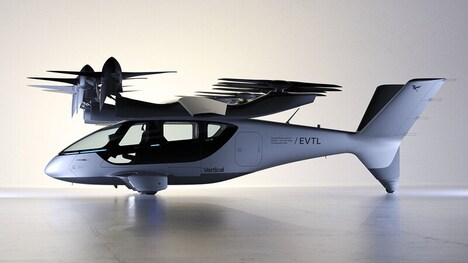
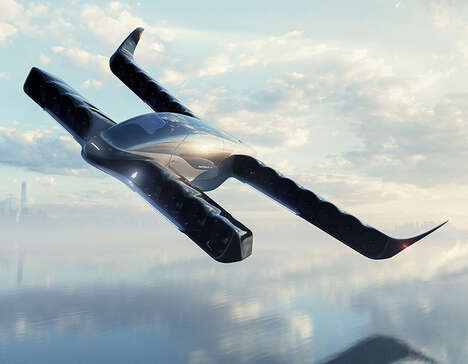
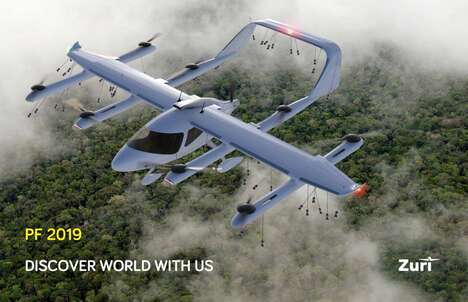
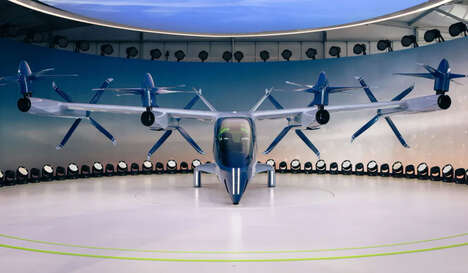
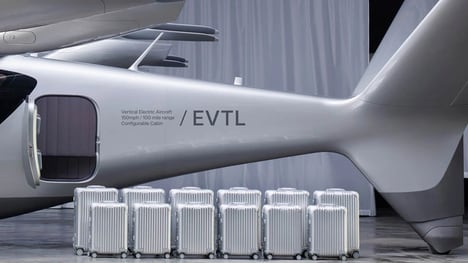
During Joowon Lee's time at the Hongik University in Seoul, he designed the eVTOL as his graduation project that aims to combat the issue of over-urbanization in busy cities. This specifically highlights the transportation issue of roadways struggling to accommodate the growing urban population.
The public eVTOL is meant to work with masses to travel from one place to another in a Linker, seating 4 to 6 people. This cuts the commute time by a large amount as it can travel in the air with wings on each side and space in the cabin to overlook the city as they travel. It also has an area for luggage and cargo to function as much more than just public transport.
Image Credit: Joowon Lee
What Makes This Trend Stand Out
- Public Flying Air-taxis
- An innovative solution to combat transportation issues in over-urbanized cities by providing a faster and more efficient mode of public transportation using eVTOL technology.
- Evtol Design Project
- A graduation project that introduces a revolutionary electric Vertical Take-Off and Landing aircraft design to address the constraints of roadways in densely populated urban areas.
- Growing Urban Population
- The rising urban population necessitates disruptive innovation in transportation to alleviate congestion and improve mobility in crowded cities.
Sectors Adopting This
- Transportation
- The transportation industry can capitalize on the development of eVTOL technology to create new opportunities for urban mobility and public transportation.
- Urban Planning
- Urban planners can leverage the concept of public flying air-taxis to address the challenges of over-urbanization and improve the efficiency of urban transport networks.
- Aerospace
- The aerospace industry can explore the potential of eVTOLs to revolutionize public transportation and create a new market for flying vehicles in urban areas.