Amazon announced an investment of more than $11.6 billion to expand and modernize its European fulfillment operations, alongside plans to add 25,000 employees in the coming years. The initiative includes the deployment of new robotics technologies and upgrades to existing fulfillment centers across Europe.
The investment will support expansion of Amazon’s robotics portfolio, including STARK, a collaborative tote-handling system; Vulcan, a robot with a sense of touch designed for complex picking tasks; and a next-generation version of Proteus, the company’s autonomous mobile robot, which is being developed with natural-language capabilities. Amazon said the program will also create new roles in areas such as reliability, maintenance and engineering as automation expands.
For consumers, the investment is intended to strengthen fulfillment capacity and support faster, more efficient order handling across Europe. The initiative reflects a broader trend toward robot-assisted logistics, where automation is being deployed alongside human workers to improve operational efficiency while creating new technical workforce opportunities.
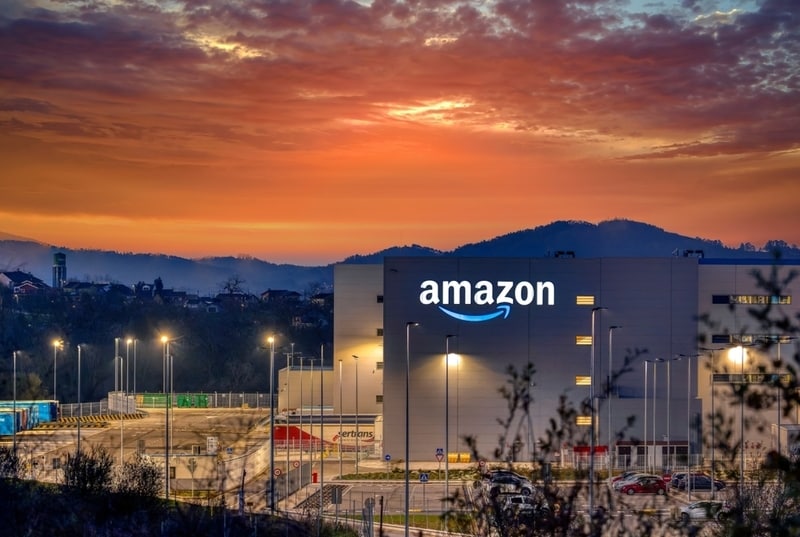
Image Credit: Shutterstock/StockPhotoAstur
What's Driving This Trend
- Collaborative Fulfillment Robotics
- Warehouse environments are shifting toward robot-assisted workflows that pair employees with autonomous systems for faster throughput, safer handling, and more flexible capacity scaling.
- Tactile Picking Automation
- Robots with touch-sensitive manipulation capabilities are creating new potential for automating complex item selection that previously depended on human dexterity.
- Natural-language Warehouse Control
- Conversational interfaces for mobile robots point to more adaptive fulfillment operations where frontline workers can coordinate automation with less technical friction.
Who This Affects Most
- E-commerce
- Faster automated fulfillment is reshaping online retail competition by making delivery speed, inventory availability, and regional capacity stronger differentiators.
- Logistics and Warehousing
- Large-scale robotics deployment is expanding the role of smart fulfillment centers as high-efficiency infrastructure for retailers, marketplaces, and third-party logistics providers.
- Industrial Robotics
- Demand for collaborative, tactile, and autonomous warehouse machines is accelerating innovation across robotics hardware, sensing systems, fleet software, and maintenance services.