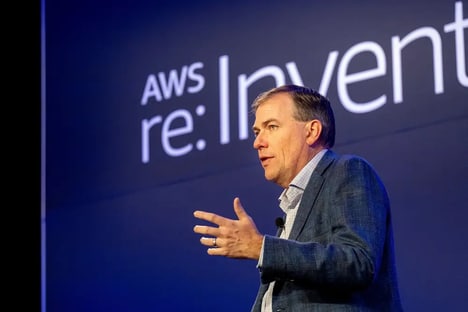

Uber introduced a move to run parts of its delivery and rideshare infrastructure on Amazon Web Services, featuring AWS artificial intelligence compute, storage and networking to support routing and operational workloads. The integration was positioned as a technical shift to leverage AWS’s scalable AI accelerators and data services to handle model training and inference at broader scale.
Details described how Uber planned to route compute-heavy tasks to AWS while maintaining internal control over customer-facing systems and latency-sensitive services. The announcement noted collaboration on infrastructure orchestration and security tooling to align cloud compute with Uber’s operational needs.
For consumers, the shift aimed to improve ETA accuracy and platform responsiveness by deploying larger, more sophisticated machine-learning models, reflecting a broader trend of transport platforms outsourcing heavy AI workloads to hyperscale cloud partners.
Image Credit: AWS, Uber
What's Driving This Trend
- Cloud-offloaded AI for Edge Services
- Shifting compute-heavy model training and inference to hyperscale cloud platforms enables smaller edge nodes to deliver richer AI experiences without local hardware investment.
- Hybrid Control-latency Architectures
- Maintaining internal control over latency-sensitive systems while outsourcing bulk AI workloads creates new architectures that balance real-time responsiveness with scalable processing.
- Hyperscale Model-oriented Routing
- Routing specific workloads to specialized cloud accelerators allows platforms to deploy larger, more sophisticated models that improve prediction accuracy and operational efficiency.
Who This Affects Most
- Rideshare and Delivery Platforms
- Integrations with cloud AI compute can transform ETA precision and dynamic routing, reshaping competitive differentiation through superior real-time user experiences.
- Cloud Infrastructure Providers
- Demand for managed AI accelerators and orchestration tooling is positioned to expand service offerings around secure, high-throughput model training and inference pipelines.
- Logistics and Fleet Management
- Access to scalable AI compute for large-scale model processing can enable predictive maintenance and route optimization at fleet scales previously limited by on-premise resources.