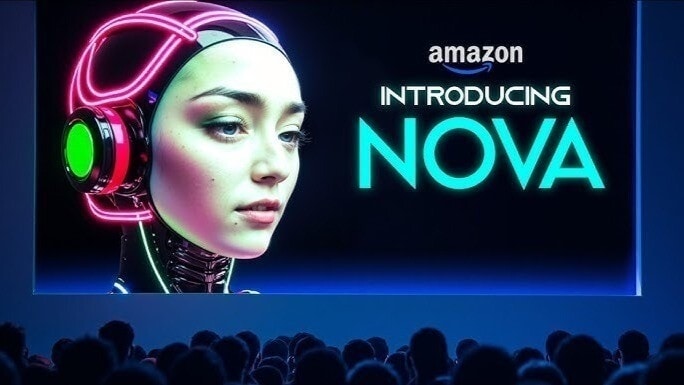
At AWS re:Invent 2025, Amazon Web Services introduced a sweeping lineup of generative and agentic AI tools aimed squarely at enterprises and developers. The launch centered on new Nova foundation models, frontier AI agents, and the Nova Forge agent-building service, all designed to run natively on AWS infrastructure. Together, they positioned AWS as a more unified, full-stack option for organizations scaling AI beyond pilots.
The announcements also included updated Trainium AI chips that delivered higher performance and efficiency, plus “AI factory” offerings that package managed infrastructure for customers building their own AI data centers. While AWS emphasized its in-house stack, it maintained access to Nvidia’s latest chips and leading third-party generative models through its cloud. This combination gave customers a mix of prebuilt building blocks and room for customization across workloads.
For enterprises, the Nova ecosystem and AI factories signaled a shift toward more turnkey yet flexible AI deployments. Teams could tap preconfigured models and agents to accelerate development while standardizing on AWS for hardware, training, and inference. The approach reflected a broader trend toward vertically integrated AI platforms that reduce complexity, control costs, and support regional sovereignty needs around data and infrastructure.
Image Credit: Amazon
Key Themes Behind This Trend
- Vertically Integrated AI Platforms
- The move towards vertically integrated AI platforms epitomizes the simplification and unification of AI toolkits, making them more accessible for enterprises seeking comprehensive solutions.
- Turnkey AI Deployment Solutions
- The development of turnkey AI deployment solutions highlights the growing demand for seamless implementation, allowing businesses to leverage preconfigured models to swiftly accelerate AI capabilities.
- AI-driven Infrastructure Customization
- AI-driven infrastructure customization emerges as a pivotal trend, enabling enterprises to match industry-specific needs with customizable combinations of generative models and AI chips.
Where This Applies
- Enterprise AI Solutions
- The enterprise AI solutions industry is transforming with tools like AWS's Nova Stack, promising scalable and integrated systems that streamline AI deployment across sectors.
- Cloud Computing
- Cloud computing is being reshaped with integrated AI capabilities, as platforms incorporate advanced models and customizable resources to enhance efficiency and adaptability.
- Semiconductors
- The semiconductor industry sees innovation through AI-focused advancements, such as Amazon's updated Trainium chips, which enhance performance and energy efficiency for AI workloads.